

TL;DR:
- House swapping offers authentic home experiences and significant cost savings compared to traditional rentals.
- Successful swaps rely on trust, clear communication, verified profiles, and thorough home preparation.
- Flexibility, detailed profiles, and positive reviews help facilitate quicker, smoother exchanges.
Booking a hotel for a family holiday or a month-long remote work stint can feel like watching your savings evaporate before the trip even begins. Short-term rental platforms have filled some of the gap, but they rarely offer the warmth of a place that genuinely belongs somewhere. House swapping changes the equation entirely. When planned well, it replaces expensive, impersonal accommodation with a real home, a real neighbourhood, and often a real saving of hundreds of pounds per trip. This guide walks you through the essentials, a practical workflow, tailored tips for families and remote workers, and everything to check before you hand over the keys.
Table of Contents
- Understand the essentials: How house swaps work
- Step-by-step workflow for planning your house swap
- Customising your swap: Tips for families and remote workers
- Troubleshooting and success factors: What to check before you swap
- Why the best swaps rely on trust, not just planning
- Ready to start your swap? Try the trusted platform
- Frequently asked questions
Key Takeaways
| Point | Details |
|---|---|
| Step-by-step planning | Follow a structured workflow for a smooth and enjoyable house swap experience. |
| Family and work friendly | Customise your search for kid-safe features and remote work setups to match your lifestyle. |
| Communication is key | Establish trust with partners through upfront messaging, house rules, and guides. |
| Preparation prevents problems | Double-check keys, cleaning, insurance, and welcome materials before any swap. |
Understand the essentials: How house swaps work
House swapping is exactly what it sounds like: two parties agree to stay in each other’s homes, either at the same time or at different points. The house swap process has matured considerably, and today’s platforms offer structured models that suit a wide range of travel styles and schedules.
The three main exchange types are worth understanding before you commit to any one approach:
- Simultaneous swap: Both parties stay in each other’s homes at the same time. It requires coordinated scheduling but is the most straightforward form of reciprocity.
- Non-simultaneous swap: You host your swap partner at a different time from when you stay at theirs. This is more flexible and suits people with unpredictable schedules.
- Hospitality swap: One party hosts the other without a direct exchange, often using a credit or points system to balance the arrangement.
The global market growth for home exchange has accelerated sharply, with the sector expanding rapidly among families and remote workers in particular. The rise of home swapping reflects a broader shift away from transactional accommodation towards more connected, cost-conscious travel. Exchange types and credit systems vary by platform, but the underlying logic is consistent: trust, reciprocity, and a verified community.
Before you can participate, most platforms require a few essentials:
- A verified identity and profile photo
- A detailed home listing with accurate descriptions and quality photographs
- Clear house rules and availability dates
- An understanding of what you expect from a swap partner
The standard planning workflow across major platforms typically involves five to six key steps, from profile creation through to post-stay review. Families benefit because they gain full homes with kitchens, gardens, and space that hotels simply cannot match. Remote workers gain reliable bases with the infrastructure they need. First-timers benefit most from the community aspect: verified members, transparent reviews, and direct messaging that builds confidence before any keys change hands.
| Exchange type | Flexibility | Best suited for |
|---|---|---|
| Simultaneous | Low | Coordinated couples, retirees |
| Non-simultaneous | High | Families, remote workers |
| Hospitality swap | Very high | Solo travellers, first-timers |
Step-by-step workflow for planning your house swap
With a grasp of the basics, here is exactly how to put your house swap into motion, step by step.
The standard workflow involves creating a verified profile, listing your home, searching for destinations, messaging potential partners, confirming the swap, preparing your home, and leaving a review afterwards. Each step matters, and skipping any one of them tends to cause friction later.
- Create and verify your profile. Complete every field: bio, travel preferences, home details, and photos. Verified profiles receive significantly more responses than incomplete ones.
- List your home accurately. Describe your space honestly, including any limitations. Overpromising leads to poor reviews.
- Search with flexibility. Browse by destination and date range. Keeping your dates flexible, particularly for a first swap, opens far more options.
- Send personalised messages. Generic requests rarely succeed. Reference something specific about the host’s home or location to show genuine interest.
- Confirm details in writing. Agree on dates, house rules, key handover, and any special requirements before finalising. Communication methods such as video calls are particularly effective for establishing trust before committing.
- Prepare your home and review afterwards. Leave the space clean, stocked with basics, and accompanied by a welcome guide. Then write an honest, specific review to help future partners.
Pro Tip: If you are new to swapping, start with a non-simultaneous exchange. It removes the scheduling pressure and lets you experience being a guest before you host, which makes you a far better host in return.
Realistic timeframes vary. First-timers with complete profiles and flexible dates can often secure a swap within two weeks. Those with rigid schedules or incomplete listings may wait considerably longer. The platform’s trust-building and verification features are designed to speed up this process by giving both parties confidence from the outset.
| Swap type | Coordination required | Typical booking lead time |
|---|---|---|
| Simultaneous | High | 4 to 8 weeks |
| Non-simultaneous | Moderate | 2 to 4 weeks |
| First-timer (flexible) | Low | Under 14 days |
Customising your swap: Tips for families and remote workers
Once you have mapped out your swap, refining the experience for your specific situation makes all the difference.
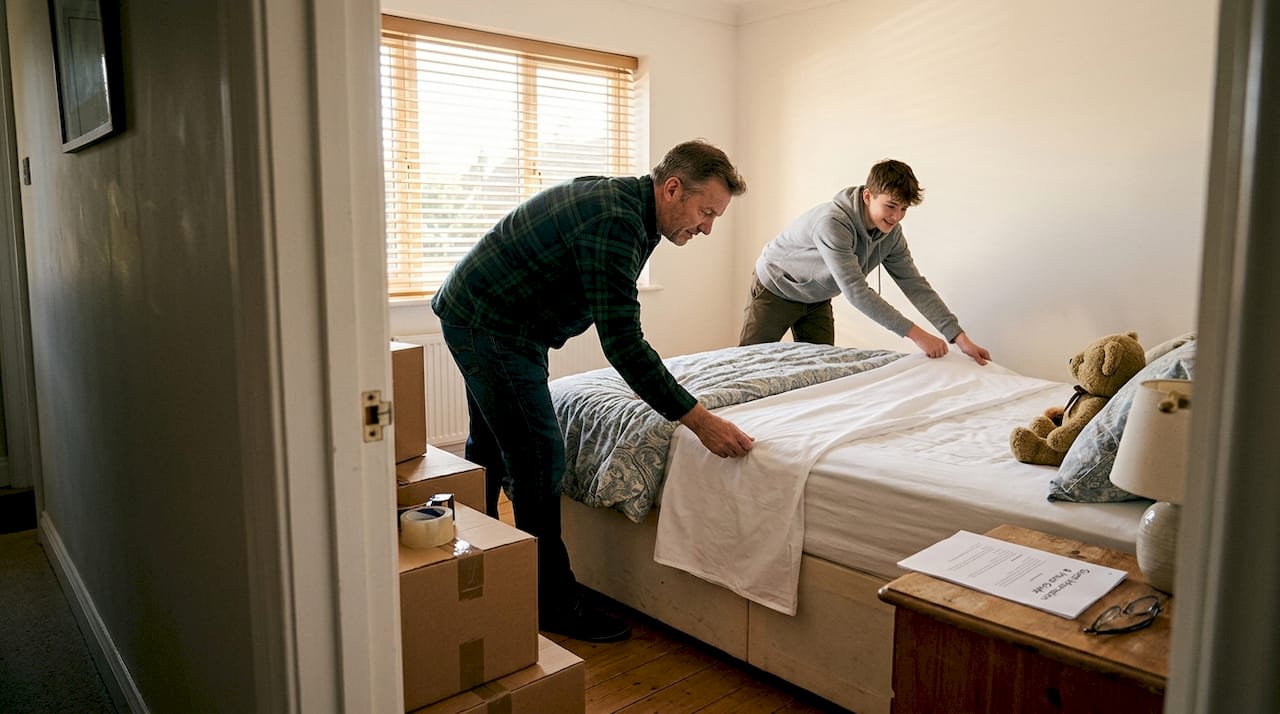
For families, the priorities are safety, space, and child-friendly features. Families need homes with stair gates, enclosed gardens, cots, and proximity to parks or schools. When messaging a potential partner, ask directly about these features rather than assuming. Equally, be transparent about your own children’s ages and habits so your host can prepare accordingly. Clarifying house rules around fragile items, off-limit rooms, and pet arrangements prevents misunderstandings before they arise.
For remote workers, the non-negotiables are fast, reliable internet and a dedicated workspace. Test and document your WiFi speed before listing, and include it in your home description. If your connection is inconsistent, identify a local co-working space and mention it in your welcome guide. Noise levels matter too: a quiet flat in a residential street is very different from a ground-floor flat on a busy road, and your swap partner deserves to know which they are getting.
Family swaps are among the fastest-growing segments of the home exchange market in 2026, with average stays of seven to ten nights, well above the platform average for solo travellers.
Here is a practical checklist of what to request and provide:
- For families: cot or travel bed, stair gates, child-proof cupboard locks, enclosed outdoor space, nearby playground or park
- For remote workers: documented WiFi speed (minimum 50 Mbps recommended), desk and ergonomic chair, good natural light, quiet working hours in the neighbourhood
- For all swappers: clear parking instructions, appliance guides, emergency contact numbers, local recommendations
Pro Tip: Write your house guide as if you are leaving instructions for a close friend who has never visited before. Include the quirks: the boiler that needs a firm press, the neighbour who waters the plants, the best local café. These small details transform a functional stay into a genuinely warm experience. Your home preparation tips and photographs are often the first impression a potential partner receives, so invest time in both.
Troubleshooting and success factors: What to check before you swap
To avoid last-minute problems and smooth the swap for everyone involved, check these crucial factors before you hand over the keys.
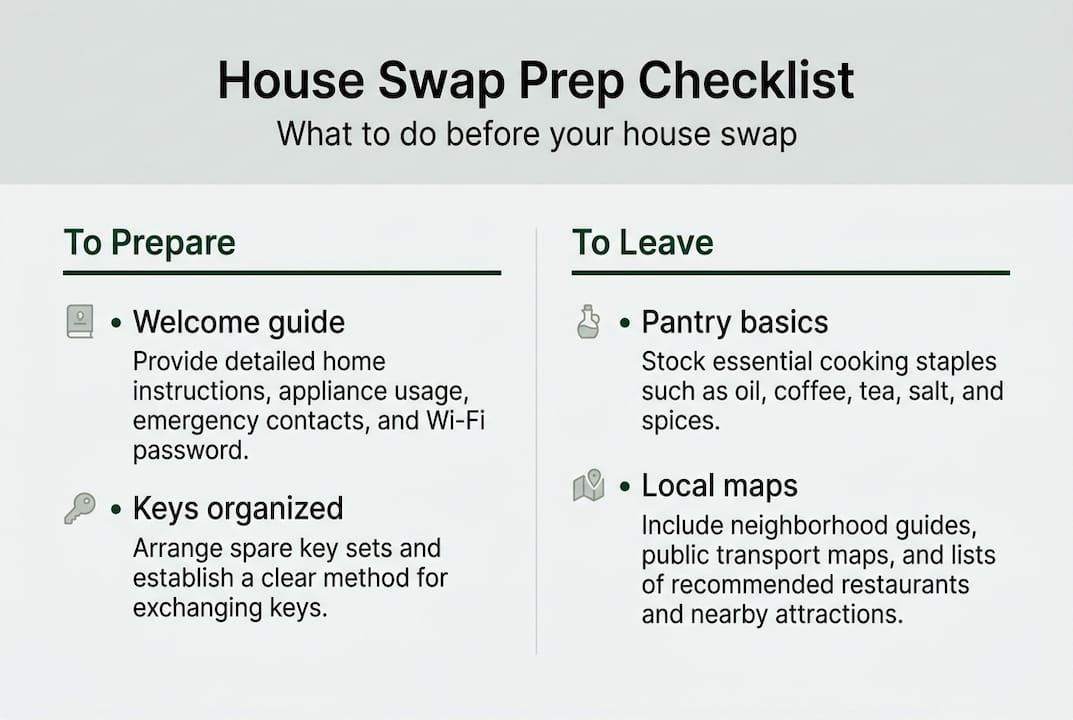
Key exchange, insurance, cleaning, and welcome guides are the most frequent sticking points for first-time swappers. Addressing them early removes the anxiety that can otherwise overshadow an otherwise well-planned trip.
Key handover options:
- Lockbox with a code shared securely before arrival
- Smart lock with a temporary access code
- In-person handover with a neighbour or friend acting as a local contact
Before you leave, double-check:
- Home insurance: confirm your policy covers short-term guests or arrange a temporary rider
- Valuables: store irreplaceable items securely or remove them entirely
- Cleaning: leave the home in the condition you would want to arrive to
- Neighbour notice: let a trusted neighbour know someone will be staying
| What to prepare | What to leave behind |
|---|---|
| Welcome guide with instructions | Basic pantry staples (oil, salt, tea) |
| Emergency contact list | Clean bed linen and towels |
| Appliance and heating guides | Toiletries (optional but appreciated) |
| Local transport and dining tips | Wi-Fi password displayed clearly |
| Secure storage for valuables | Bin bags and cleaning supplies |
Pro Tip: A one-page welcome guide, printed and left on the kitchen counter, prevents the majority of mid-stay messages. Cover entry codes, heating, rubbish collection days, and your top three local recommendations. It takes thirty minutes to write and saves hours of back-and-forth.
Post-stay reviews deserve more attention than most first-timers give them. House swapping takes communication and preparation to succeed, but it becomes noticeably easier with each swap as your review history grows. A specific, generous review encourages your partner to reciprocate and signals to future partners that you are a reliable, considerate swapper. The decluttering and guides section on SwapSpace offers practical advice on presenting your home at its best.
Why the best swaps rely on trust, not just planning
Checklists and comparison tables are useful. They reduce friction and help you avoid obvious mistakes. But the swappers who consistently enjoy the best experiences share something that no workflow can fully capture: a genuine willingness to communicate openly and treat another person’s home with care.
Verification and communication are more decisive for swap success than any automation or checklist. Reviews build a reputation over time, and that reputation is what opens doors, sometimes literally, to homes that would otherwise never be available to you. A message that is warm, specific, and honest will outperform a technically perfect profile every time.
The swap process overview at SwapSpace is built around this principle. Planning gives you a structure. Trust gives you the experience worth planning for. Leave every home slightly better than you found it, share the small comforts you would want yourself, and the community rewards that behaviour with exactly the kind of travel you set out to find.
Ready to start your swap? Try the trusted platform
If you are feeling ready to put this workflow into practice, the right platform can make every step easier.
SwapSpace connects verified members across a growing global network of homes, from city flats to countryside retreats. Whether you are a family searching for a child-friendly base, a remote worker needing reliable WiFi and a proper desk, or a first-timer taking the leap, the platform is built to support you at every stage. Explore how SwapSpace works to understand the full journey from listing to stay, and use the home photo guide to present your space in its best light. Your first swap could be closer than you think.
Frequently asked questions
How do I find a trusted house swap partner?
Look for members with verified profiles and reviews and complete home details, then use platform messaging or a video call to confirm the arrangement suits both parties.
What should I prepare in my home before the swap?
Declutter main living spaces, set clear house rules, prepare a welcome guide, and arrange key handover and cleaning in advance. Detailed guides and a clean home are the most consistent factors in positive swap reviews.
Are house swaps safe for families and children?
Yes, provided you prioritise kid-friendly homes, clarify expectations with your swap partner, and check neighbourhood safety. Families are a growing segment of the home exchange community, with child-friendly features increasingly common in listings.
How soon can I arrange my first house swap?
Fast swaps are possible for first-timers who complete their profiles fully and remain flexible on dates, with some members securing their first exchange in under fourteen days.
