

TL;DR:
- Home exchange is very safe, with over 99.7% of exchanges ending without incidents.
- Choosing reputable platforms with verified profiles and guarantees is essential for safety.
- Clear communication, detailed home manuals, and home protection measures prevent misunderstandings.
Handing your house keys to a stranger sounds alarming, yet 99.7% of swaps on leading platforms conclude without a single serious incident. Home exchange is growing fast as travellers seek genuine, cost-free alternatives to hotels and short-term rentals, but safety concerns still hold many people back. The good news is that risk can be reduced dramatically with a handful of proven strategies. This article walks you through the most important safety tips, from choosing the right platform to protecting your valuables and fostering mutual respect, so you can swap with real confidence.
Table of Contents
- Choose reputable platforms for peace of mind
- Communicate clearly and set expectations up front
- Protect your home and valuables
- Follow the code of conduct and foster mutual respect
- Why home exchange risks are lower than most believe
- Explore safe and affordable home swaps with SwapSpace
- Frequently asked questions
Key Takeaways
| Point | Details |
|---|---|
| Pick trusted platforms | Choose platforms with identity verification and guarantees to ensure a safe exchange. |
| Communicate clearly | Set expectations and rules with your swap partner to prevent misunderstandings. |
| Secure your valuables | Lock away valuables and document your home’s condition before and after exchanges. |
| Respect codes of conduct | Follow standard rules and mutual respect to foster a trustworthy swap community. |
Choose reputable platforms for peace of mind
The single most important decision you make in any home exchange is which platform you trust with the process. Not all swapping platforms are equal. Some operate as open marketplaces with minimal checks, while others function as tightly managed communities with rigorous identity verification, peer reviews, and clear dispute resolution. The platform you choose sets the tone for everything that follows.
Look for platforms that offer verified member profiles, two-way reviews, and clearly stated member guarantees. Identity verification, reviews, and guarantees are the three pillars of member trustworthiness on any credible exchange platform. When a platform asks members to submit government-issued ID and link social profiles, it creates a powerful deterrent against bad actors.
The statistics bear this out. HomeExchange, one of the largest platforms globally, reports that 99.7% of exchanges are completed without incident. Serious problems are, in fact, rarer than those encountered in traditional hotels. As one industry observer put it: “Serious incidents are rare, and generally lower than the issues guests report in hotel stays.” That context matters when weighing up your options.
Some platforms go further by offering financial protection. Kindred provides $100,000 host protection alongside 24/7 support and professional cleaning standards, which addresses one of the most common anxieties around home swapping. As you research your options, it is worth understanding that house swapping is safer than you think when you stick to established, reputable communities.
Key features to compare when choosing a platform:
- Identity verification (government ID, social profile links)
- Bidirectional reviews visible to all members
- Clear code of conduct with enforceable consequences
- Host protection guarantees or insurance partnerships
- Active member support and dispute resolution team
| Feature | Basic platforms | Reputable platforms |
|---|---|---|
| Identity verification | Optional | Mandatory |
| Member reviews | Limited | Comprehensive |
| Host protection | None | Up to $100,000 |
| Dispute resolution | Email only | Dedicated team |
| Incident rate | Unknown | Under 0.3% |
Familiarising yourself with essential home exchange platform features before signing up will save you from unpleasant surprises later.
Communicate clearly and set expectations up front
With a secure platform in place, the next step is about clear, open communication. Many of the minor issues that do arise in home exchanges stem not from dishonesty, but from assumptions. One person’s definition of “tidy” differs from another’s. Agreeing on expectations early eliminates most of these grey areas.
Start by reviewing your potential partner’s profile and reviews thoroughly. Then move to direct messaging and, crucially, arrange a video call before confirming any exchange. A video call, clear house rules, and a detailed home manual with emergency contacts and appliance instructions are widely recognised as the most effective tools for preventing misunderstandings.
Pro Tip: Always schedule a video call before confirming a swap. Seeing and speaking with your exchange partner in real time builds genuine trust and allows you both to ask questions that written messages can miss.
A home manual does not need to be elaborate, but it should cover the essentials. Think of it as a practical guide for someone living in your space for the first time. Use the following checklist when preparing yours:
Home manual essentials:
- Appliance instructions (boiler, washing machine, dishwasher)
- Wi-Fi details and any smart device access
- Emergency contacts (plumber, electrician, local GP)
- House rules (no smoking, no parties, pet policy)
- Bin collection days and recycling guidance
- Parking arrangements and neighbourhood notes
- Check-out procedure and key return instructions
For your initial conversation, use this home swap verification checklist to ensure nothing critical is overlooked. A thorough home exchange step-by-step guide can also help first-time swappers understand exactly what to discuss and when. Following trusted home exchange tips from experienced swappers reinforces these habits.
Protect your home and valuables
Once you have set clear expectations, protecting your space and valuables takes priority. The vast majority of swappers are respectful and careful, but sensible precautions are simply good practice, just as you would secure your home before any holiday.
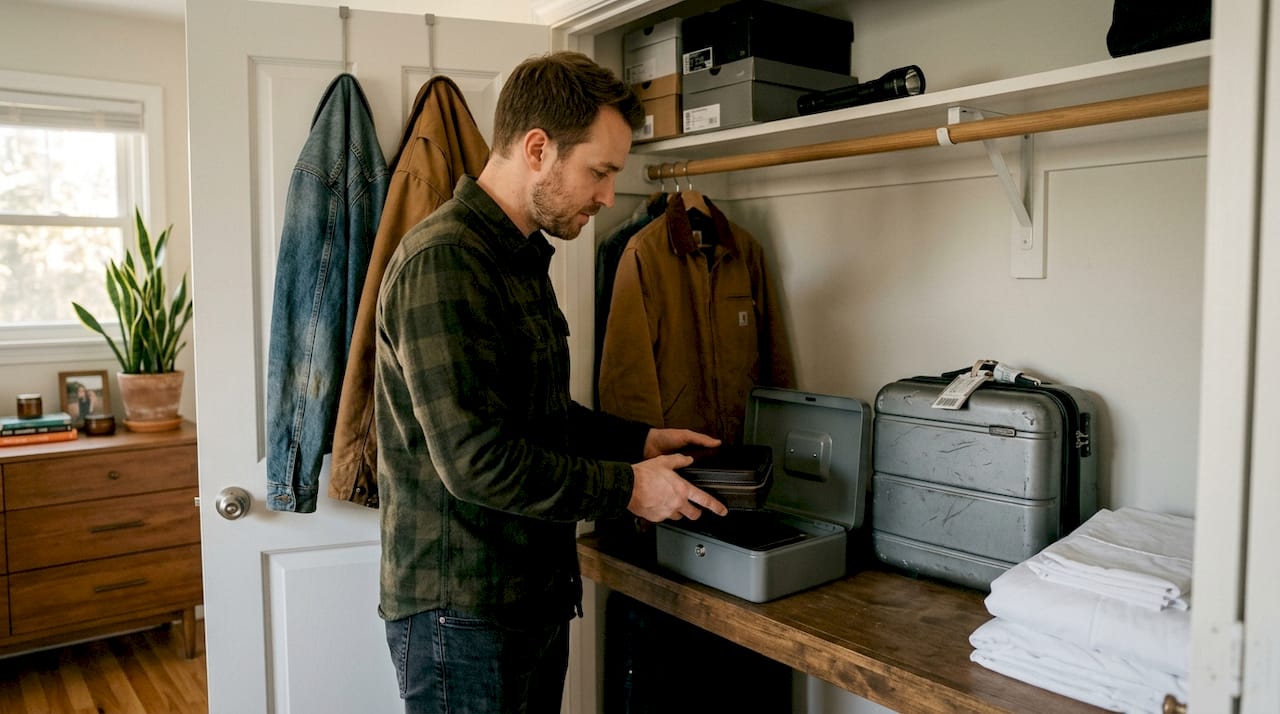
Securing valuables in a safe or lockbox, and documenting your home’s condition with photos and video before and after each swap, are among the most effective steps you can take. Lock away personal documents, jewellery, and irreplaceable items. A small lockbox or a lockable wardrobe is sufficient for most situations.
Pro Tip: Record a timestamped walkthrough video of your entire property on the morning your guests arrive and again after they leave. This creates indisputable evidence of your home’s condition and removes ambiguity from any potential dispute.
Steps to protect your home before a swap:
- Secure passports, financial documents, and personal data in a lockbox
- Clear personal photographs and sentimental items from open display
- Record a timestamped video walkthrough of every room
- Photograph any pre-existing damage (scuffs, cracks, worn fixtures)
- Test all smoke and carbon monoxide alarms
- Confirm that locks on windows and external doors are functioning
Insurance is equally important. Many standard home insurance policies do not automatically cover short-term exchanges, so contact your insurer to clarify your position before confirming a swap. Home swap insurance coverage varies significantly between providers, and some now offer specific endorsements for exchange arrangements.
Platform guarantees complement but do not replace personal insurance. Review what secure home swaps look like in practice, and explore your insurance options for home swaps to make an informed decision about the level of cover you need.
| Protection layer | What it covers | Who provides it |
|---|---|---|
| Home insurance (updated) | Structural and contents damage | Your insurer |
| Platform host guarantee | Accidental damage up to stated limit | Exchange platform |
| Lockbox/safe | Personal valuables and documents | You |
| Photo/video documentation | Evidence for dispute resolution | You |
Follow the code of conduct and foster mutual respect
With your home protected, understanding and respecting community codes completes the safety picture. Every reputable exchange platform publishes a code of conduct and, importantly, members agree to it when they join. This shared framework is one of the most underappreciated safety features in the entire home exchange model.
Respecting property, avoiding parties and subletting, disclosing cameras and security systems, and leaving the home clean are the core behavioural standards that keep the community trustworthy. These are not merely suggestions. Violation of conduct codes can result in suspension from the platform, which creates a genuine incentive for good behaviour.
Transparency around security devices deserves particular attention. If you have a doorbell camera, a smart lock, or any other monitoring device, you must disclose this to your exchange partner before the swap begins. Privacy expectations are a two-way street, and disclosure protects both parties.
“Edge cases are rare in home exchange, and the overwhelming majority of reported issues amount to minor wear and tear rather than deliberate damage or serious misconduct.”
Cleaning standards and check-out etiquette also matter. Leave the home in the condition you would expect to find your own home. Strip the beds, wash any used linen, clean the kitchen, and take out the bins. These small acts of consideration build the mutual respect that makes the entire model work.
It is worth noting that HomeExchange’s complaint rate remains strikingly low relative to its membership base. Disputes do occur, but platforms have robust mediation processes in place. Compared with short-term rental platforms where anonymous guests check in with no personal investment, home swappers have far greater motivation to behave well. They are, after all, trusting you with their home too. For more on why home swaps are safer than popular perception suggests, the evidence is reassuring.
Community code essentials at a glance:
- No parties, events, or gatherings beyond agreed occupants
- No subletting or third-party use of the property
- Full disclosure of cameras, alarms, and security systems
- Prompt communication if any accidental damage occurs
- Check-out on time and leave the property clean and tidy
Why home exchange risks are lower than most believe
Stepping back, it is worth asking why home exchanges tend to be so safe when the premise sounds inherently risky. The answer lies in the self-selecting nature of the community. People who list their homes on exchange platforms are, by definition, willing to reciprocate. They are accountable by identity, reviewable by peers, and personally invested in the outcome because their own home is simultaneously in someone else’s care.
This dynamic is fundamentally different from anonymous short-term rental guests. The reciprocity at the heart of home swapping creates a mutual accountability that hotels and rental platforms simply cannot replicate. Incidents are statistically uncommon, and when they do occur, they are almost always minor.
The sector is also growing rapidly, which signals real-world confidence. HomeExchange now counts 250,000 members, with 41% growth in 2025, and similar growth patterns are visible across the industry. Platforms invest heavily in verification, moderation, and dispute resolution precisely because their reputation depends on maintaining trust. That structural incentive works in members’ favour.
Conventional wisdom tends to overestimate home exchange risk because it applies the logic of anonymous rental transactions to a very different model. Once you understand that house swapping is safer than you think from a structural standpoint, the precautions covered in this article feel less like defensive measures and more like straightforward good practice.
Explore safe and affordable home swaps with SwapSpace
If the safety tips above have made the prospect of home swapping feel more manageable, SwapSpace is built to support exactly that journey.
The SwapSpace platform connects verified members worldwide, with identity checks and a trusted community model at its core. Whether you are curious about costs or ready to list your home, the travel cost calculator makes it easy to see the financial benefits at a glance. You can also explore how SwapSpace works in full detail, from setting up your listing to confirming your first exchange. Every feature is designed to give you confidence before, during, and after your swap.
Frequently asked questions
How safe is home exchange compared to hotels?
Home exchange incidents are less common than hotel ones, with reputable platforms reporting over 99% safe swaps. The self-selecting, identity-verified nature of exchange communities makes serious problems statistically rare.
What insurance covers home swaps?
Most platforms offer host protection guarantees, and Kindred provides up to $100,000 host protection alongside 24/7 support. You should also contact your home insurer to check whether your policy covers short-term exchange arrangements.
What should I include in my house manual?
Include appliance instructions, Wi-Fi details, emergency contacts, house rules, and clear expectations for cleaning and security. A thorough manual prevents misunderstandings and shows your exchange partner that you have thought things through carefully.
Is it necessary to disclose security cameras during a home swap?
Yes, full disclosure of cameras and security systems is required by most platform codes of conduct. Transparency protects both parties and is fundamental to a respectful and legally sound exchange.
What if there is damage or a dispute after a swap?
Damage is uncommon and usually minor; BBB complaint data shows that platforms handle the majority of issues through mediation. Both parties benefit from the photo and video documentation recommended earlier in this article.
