
TL;DR:
- Home exchange offers a cost-effective alternative with significant savings and authentic local experiences.
- Building a complete, honest profile and effective communication are key to successful swaps.
- Trust, flexibility, and genuine engagement enhance the exchange experience beyond the process.
Travel costs keep climbing, and finding accommodation that feels genuinely local rather than merely convenient is harder than ever. Hotels are expensive, and short-term rentals often deliver a sanitised version of a destination rather than the real thing. Home exchange offers a proven alternative, with most members reporting savings of $150 to $400 per night compared to traditional accommodation. This guide walks you through every stage of the process, from understanding your options and setting up a compelling listing to communicating with potential partners and preparing your home for a safe, successful swap.
Table of Contents
- Understanding home exchange: Options, benefits, and who can participate
- Preparing for your swap: Setting up your profile and listing
- Making the match: Searching, communicating, and finalising details
- Swapping with confidence: Preparation, security, and common pitfalls
- What most guides miss about home exchange success
- Try safe, trusted home exchanges with SwapSpace
- Frequently asked questions
Key Takeaways
| Point | Details |
|---|---|
| Unlock affordable travel | Swapping homes lets you travel authentically and save substantial accommodation costs. |
| Trust and preparation matter | Honest listings, verification, and clear communication build successful exchanges. |
| Plan for smooth swaps | Prepare your home, use platform tools, and confirm details to enjoy worry-free exchanges. |
| Benefit from global networks | Platforms connect you with verified members across 145+ countries for unique experiences. |
Understanding home exchange: Options, benefits, and who can participate
A home exchange is a straightforward arrangement: two parties agree to stay in each other’s homes, either at the same time or at different points. Unlike short-term rentals, there is no nightly fee changing hands. The experience is reciprocal by nature, which tends to attract members who treat other people’s homes with genuine care.
The four main types of home exchange are:
- Simultaneous swaps: Both parties stay in each other’s homes at the same time. This is the classic model.
- Non-simultaneous swaps: Stays happen at different times, requiring flexibility and good communication.
- Points or credits-based swaps: You host someone and earn credits, then spend those credits to stay elsewhere. This removes the need to find a direct match.
- Hospitality exchanges: One party hosts the other, sometimes with the host present, offering a more social experience.
The scale of the home exchange community is genuinely impressive. Platforms now list over 360,000 homes across more than 145 countries, spanning city flats, rural retreats, coastal cottages, and everything in between. That breadth means almost any destination is within reach.
A common question is whether you need to own your home to participate. The answer is no. Renters can participate provided their lease permits guests and their landlord is informed and agreeable. It is worth reviewing your tenancy agreement carefully and getting any approval in writing before listing your property.
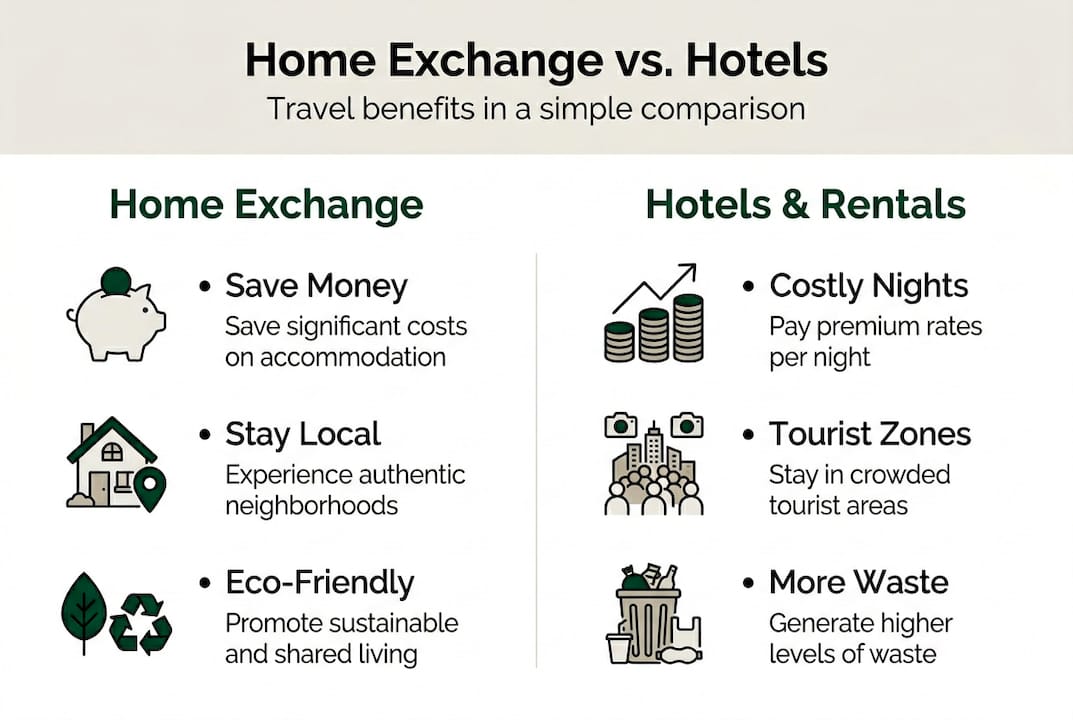
| Benefit | Home exchange | Hotel | Short-term rental |
|---|---|---|---|
| Nightly cost | Free or credits | $150 to $400+ | $80 to $300+ |
| Local authenticity | High | Low | Medium |
| Kitchen access | Yes | Rarely | Usually |
| Community trust | Verified members | Anonymous | Varies |
| Environmental impact | Lower | Higher | Medium |
Beyond cost, home exchange supports a more sustainable form of travel. Staying in an existing home uses fewer resources than a hotel and encourages longer, slower trips rather than rushed, expensive getaways.
Preparing for your swap: Setting up your profile and listing
With the basics clear, your next priority is creating a listing people will trust and want to swap with. A strong profile is the foundation of every successful exchange. Think of it as your introduction to a community of like-minded travellers who are deciding whether to trust you with their home.
Here is how to build a listing that attracts genuine interest:
- Sign up and verify your identity. Choose a reputable platform and complete all verification steps. A verified badge signals trustworthiness immediately.
- Write an honest, detailed description. Describe your home accurately, including its size, location, nearby transport links, and any quirks worth knowing about.
- Upload high-quality photographs. Good photos and honest descriptions are among the most important factors in attracting responses and building trust.
- List your amenities clearly. Wi-Fi speed, parking, a washing machine, a garden, or proximity to a train station can all be deciding factors for potential partners.
- Set your availability. Be specific about dates you are open to hosting, and keep this updated regularly.
Understanding how SwapSpace works before you list helps you tailor your profile to what the community values most. Verified members, clear communication, and accurate listings consistently attract more interest than incomplete profiles.
| Profile element | Complete listing | Incomplete listing |
|---|---|---|
| Photos | 8 to 15 high-quality images | 1 to 3 blurry images |
| Description | Detailed, honest, personal | Vague or minimal |
| Verification | Fully verified | Unverified |
| Availability | Up to date | Outdated or missing |
| Response rate | High | Low |
Pro Tip: When writing your description, imagine you are explaining your home to a friend who has never visited your city. Mention the coffee shop two streets away, the reliable bus route, and the fact that the kitchen gets lovely morning light. Specificity builds confidence. For guidance on photographing your home to its best advantage, consult the platform’s photo guidelines before your shoot.
Making the match: Searching, communicating, and finalising details
With your listing set, it is time to connect with fellow members and secure your first swap. Searching for the right home is part practical, part intuitive. Use filters to narrow by location, dates, number of guests, pet-friendliness, and specific amenities. Once you have found a promising listing, read the description carefully and look at the host’s reviews before reaching out.
Your first message matters more than most people realise. A generic enquiry is easy to ignore. A personalised note that references something specific about their home or destination shows genuine interest and significantly improves your chances of a reply. Personalised messages and video calls are among the most effective ways to build trust before committing to an exchange.
Here is a checklist of what to cover in your initial communications:
- Confirm exact dates and the number of guests travelling
- Clarify whether pets are welcome on either side
- Discuss house rules, such as smoking policies or noise expectations
- Ask about parking, key handover, and any appliances that need explanation
- Share your own house rules clearly and without apology
Once the conversation is progressing well, arrange a video call. Seeing each other’s faces, even briefly, changes the dynamic entirely. It transforms an online transaction into a human connection.
Pro Tip: Before agreeing to any swap, confirm that both parties have agreed on the exact dates, the number of people staying, pet arrangements, and any specific rules in writing through the platform. This protects both sides and removes ambiguity. Reviewing using photos for communication can also help you share visual context about your home during the negotiation stage.
Always finalise your agreement through the platform’s official channels rather than moving to private email or messaging apps. This keeps a record and ensures both parties are protected.
Swapping with confidence: Preparation, security, and common pitfalls
Before you hand over your keys, a few essential steps ensure a smooth and safe swap. Preparing your home thoughtfully is not just courteous; it sets the tone for the entire exchange and encourages your guests to treat your space with equal care.
Start with these practical steps:
- Clean and declutter thoroughly. Clear personal items from surfaces and create space in wardrobes and drawers for your guests.
- Secure valuables and sensitive documents. Lock away anything irreplaceable, including jewellery, financial paperwork, and personal electronics you are not comfortable leaving out.
- Write a welcome guide. Include Wi-Fi details, appliance instructions, bin collection days, local restaurant recommendations, and emergency contact numbers.
- Communicate any quirks. If the shower takes thirty seconds to warm up or the back gate sticks, say so. Transparency prevents frustration.
On the security side, keep all communications on the platform rather than moving to external channels. This protects you if a dispute arises and gives the platform’s support team a clear record to work from. Be cautious of any request to bypass the platform’s system.
“Serious incidents during home exchanges occur in under 1% of swaps, and most major platforms offer damage insurance up to $1m to protect members in the rare event that something goes wrong.”
That figure is reassuring, but preparation remains your best protection. After your swap, leave a detailed and honest review. Reviews are the backbone of the secure swap process and help every member make better decisions. Read your guests’ review of your home too; constructive feedback helps you improve for next time.
What most guides miss about home exchange success
Most step-by-step guides focus on process, and process matters. But the members who get the most from home exchange are rarely the ones who follow every rule most precisely. They are the ones who approach each swap with genuine openness.
Trust and community verification form the structural backbone of any exchange, but the texture of a great experience comes from something less tangible: a willingness to be flexible, to accept that another person’s home will feel different from yours, and to see that difference as interesting rather than inconvenient.
The most rewarding exchanges tend to involve people who leave a thoughtful welcome note, who recommend their favourite local spots without being asked, and who follow up afterwards with genuine curiosity about how the trip went. These small acts build relationships that often extend well beyond a single swap. Many long-term members count former exchange partners among their closest friends.
The real value of home exchange is not purely financial, though the savings are substantial. It is the sense of arriving somewhere that feels like a place that belongs somewhere, rather than a room that could be anywhere. That experience is worth more than any nightly rate.
Try safe, trusted home exchanges with SwapSpace
If you are ready to experience the best of home exchange, SwapSpace offers the simplest and most supportive way to begin. The platform is built around verified members, a global listing database, and a credit system that gives you flexibility even without a direct match.
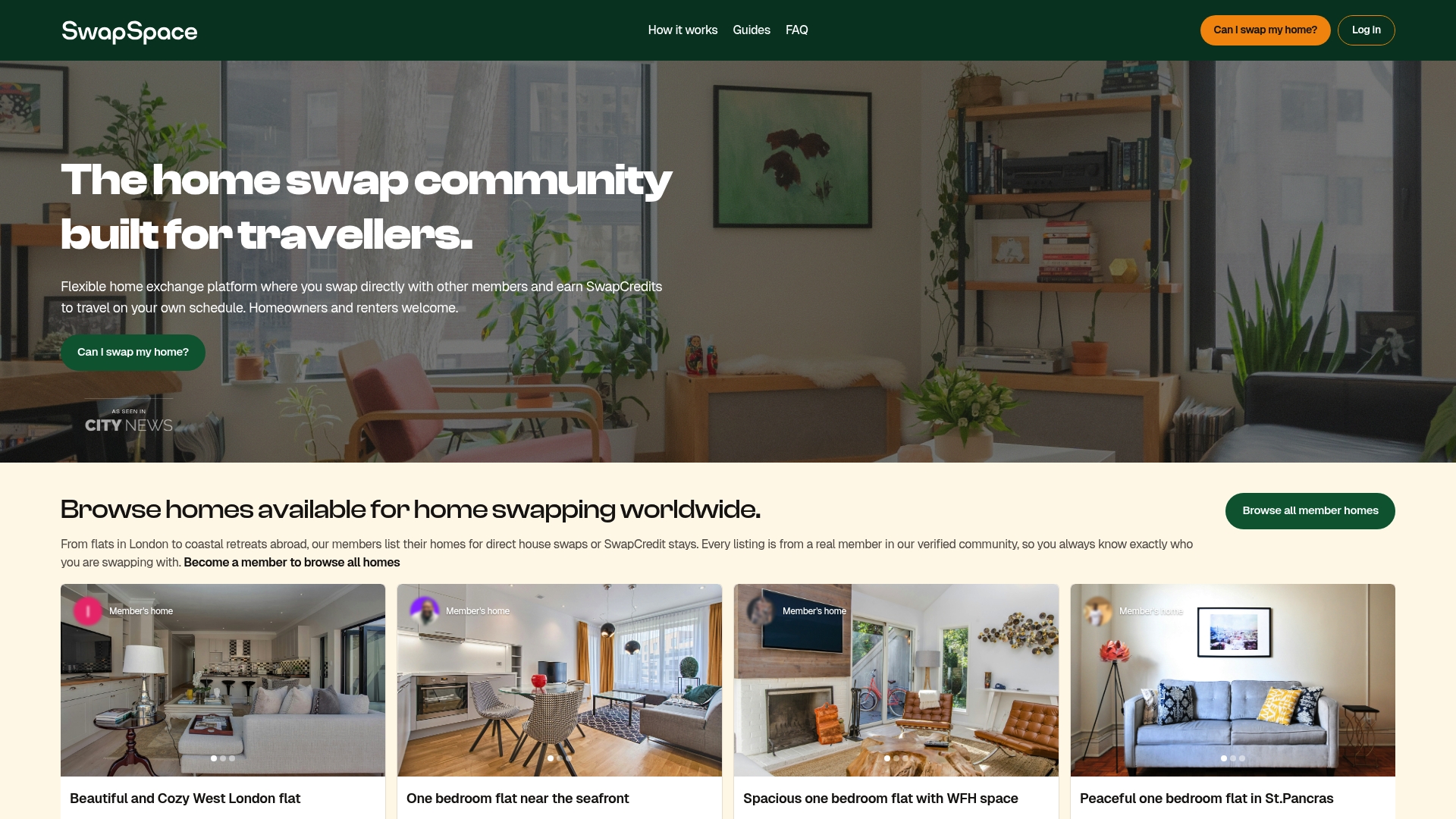
SwapSpace home swapping connects homeowners and renters with a trusted global community, backed by identity verification and a safety-first approach. Whether you are planning your first swap or looking to refine your listing, explore how it works and review the photo guidelines to give your listing the best possible start. Your next authentic, affordable travel experience could be closer than you think.
Frequently asked questions
Can I swap homes if I rent and not own?
Yes, renters can participate provided their lease permits guests and their landlord has been informed and given approval. Always get any consent in writing before listing.
How far in advance should I arrange a home exchange?
For popular destinations, plan two to six months ahead to access the widest choice of partners and secure your preferred dates.
Is my home covered in case of damage during a swap?
Most major platforms offer damage insurance up to $1m, and serious incidents are rare, occurring in fewer than 1% of exchanges.
How much can I really save by home exchanging?
Members typically report savings of $150 to $400 per night compared to hotels or short-term rentals, making it one of the most cost-effective ways to travel.
