

TL;DR:
- Secure home swaps involve verified members, written agreements, and community review systems.
- Proper safety measures include identity verification, insurance, and conducting video calls with partners.
- Risks are minimal, with serious incidents less common than in hotels, especially when following best practices.
Most people assume that inviting a stranger into their home is inherently risky. Yet serious incidents during home swaps are less than 1%, a figure lower than comparable incidents reported in hotels or major short-term rental platforms. That single statistic challenges a great deal of conventional thinking about home exchange. This article explains what a secure home swap actually involves, how the process works in practice, what safety measures matter most, and how to assess whether the risks are as significant as they first appear.
Table of Contents
- What is a secure home swap?
- How do secure home swaps work?
- Safety measures: what keeps a home swap secure?
- Use cases, common concerns, and the reality of risk
- Our take: why secure home swaps work (when done right)
- Ready to try a secure home swap?
- Frequently asked questions
Key Takeaways
| Point | Details |
|---|---|
| Verification is vital | Choose platforms that require identity, ownership checks, and mutual reviews. |
| Insurance is your responsibility | Platform insurance is rare, so secure home and contents cover for peace of mind. |
| Trust and process matter | Follow official procedures and never move outside official channels to drastically reduce risk. |
| Real risks are rare | Home swaps have lower incident rates than hotels or rentals when done securely. |
What is a secure home swap?
A secure home swap is a formal, mutually agreed exchange of homes between two verified parties, typically arranged through a dedicated platform rather than an informal arrangement between acquaintances. The key word here is verified. Unlike a casual exchange organised through social media or word of mouth, a secure swap involves structured identity checks, ownership documentation, written agreements, and community accountability.
How secure swaps work differs significantly from simply lending your flat to a friend. Platforms such as HomeExchange and SwappaHome act as trusted intermediaries, providing the infrastructure for platform verification processes that include government-issued ID checks, proof of residence, and profile reviews from previous swap partners. This multi-layered approach is what separates a secure swap from an unverified one.
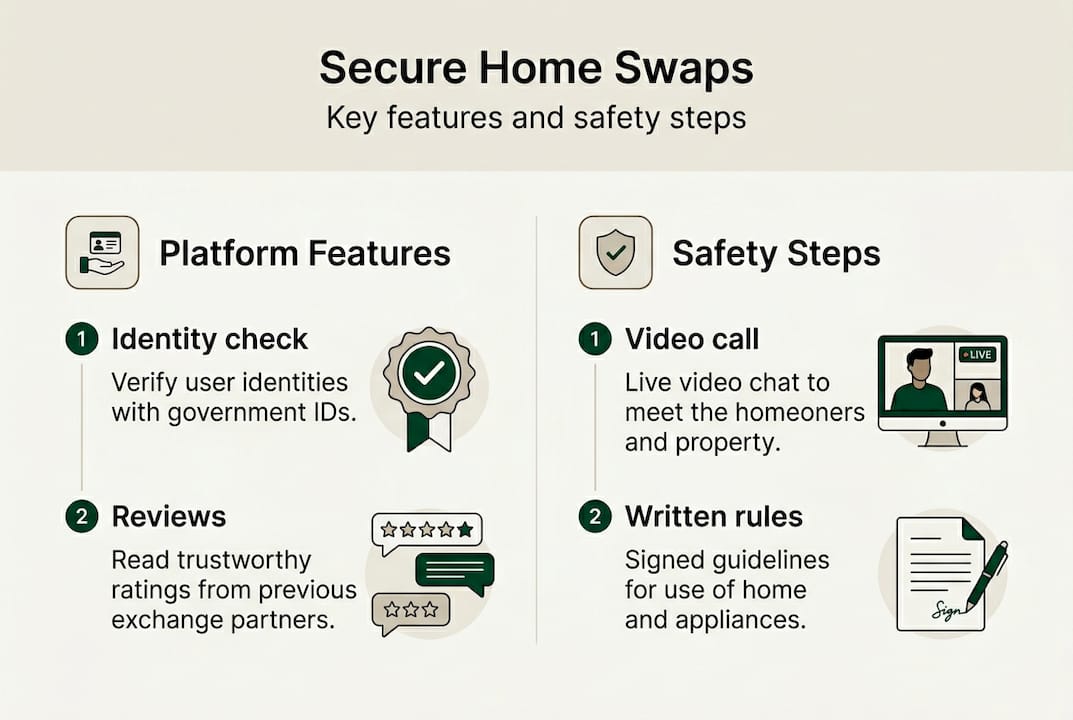
The concept of reciprocity sits at the heart of the model. Because both parties have something to lose, namely their own home, there is a built-in incentive to behave responsibly. This mutual stake creates a dynamic quite different from a standard rental, where the guest has no equivalent skin in the game.
A secure home swap involves mutual exchanges facilitated via trusted platforms with multiple safety checks, including written agreements and review systems that hold both parties accountable.
The core features that define a secure home swap include:
- Identity verification: Government-issued ID and proof of home ownership or tenancy
- Detailed member profiles: Photos, descriptions, and swap history visible to all members
- Written swap agreements: Dates, house rules, and expectations confirmed in writing
- Review systems: Post-swap feedback that builds or diminishes a member’s reputation
- Community standards: Platform-enforced codes of conduct with account suspension for violations
“A home swap is not simply an exchange of keys. It is an exchange of trust, backed by a system designed to make that trust well-founded.”
This community trust element is what keeps the model functioning. Platforms invest heavily in maintaining the integrity of their member base, because a single bad experience publicised within the community can erode confidence far more broadly.
How do secure home swaps work?
With the definition clear, let’s explore what’s actually involved in arranging a secure swap. The mechanics are more structured than many people expect, and understanding each stage removes much of the uncertainty.
Secure home swap mechanics involve platform sign-up, ID and ownership verification, detailed profiles, contract agreements, secure key routines, and post-swap reviews. Here is how the process typically unfolds:
- Register on a reputable platform and complete identity verification, including photo ID and proof of address.
- Create a detailed home listing with accurate photos, house rules, available dates, and local information.
- Browse and connect with potential swap partners whose homes and dates align with your plans.
- Exchange messages to discuss expectations, house rules, and any specific requirements.
- Agree terms in writing via the platform’s built-in agreement tools or a separate written contract.
- Arrange secure key handover using a lockbox, trusted neighbour, or in-person handover.
- Complete a post-swap review to share your experience and contribute to the community’s trust system.
For those comparing platforms before committing, the table below outlines the core features of three well-known services:
| Platform | Verification | Credit system | Simultaneous swaps | Free tier |
|---|---|---|---|---|
| HomeExchange | ID + ownership | Yes | Yes | No |
| SwappaHome | ID + profile | No | Yes | Yes |
| SwapSpace | ID + invite-only | Yes (SwapCredits) | Yes | Yes |
A step-by-step home swap guide can help first-timers navigate the process with confidence, particularly around the verification and agreement stages.
For home swap safety steps, experts consistently recommend video calls before finalising any arrangement. Seeing the other person’s face and home in real time adds a layer of reassurance that written profiles alone cannot provide.
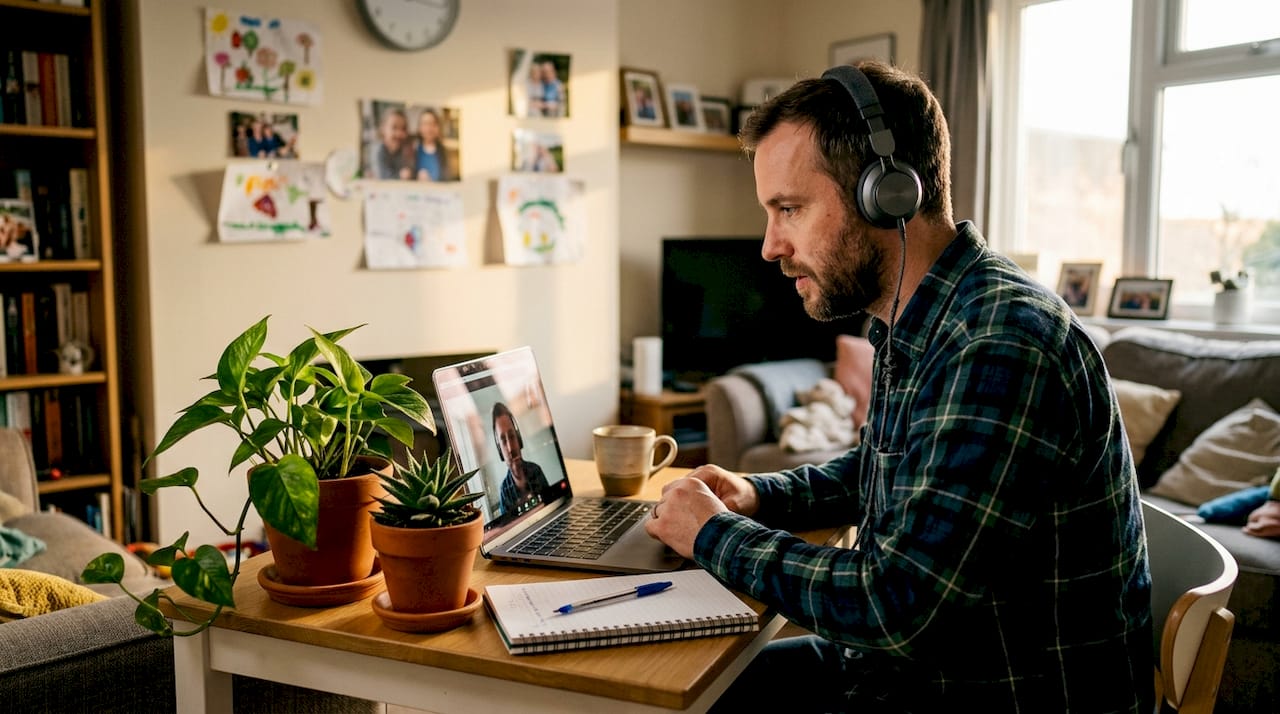
Pro Tip: Before agreeing to any swap, conduct a video call with your swap partner and confirm all house rules in a written document, even if the platform provides a standard agreement template. Personal specifics, such as parking arrangements or pet policies, are worth capturing explicitly.
Safety measures: what keeps a home swap secure?
Understanding the process is crucial, but what truly keeps a home swap secure are the robust safety measures in place. These span both platform-level protections and the practical steps individual homeowners and renters take themselves.
Best practices significantly reduce real risks, including physical and documentation checks, insurance arrangements, valuables storage, and post-swap reviews. The responsibility is shared between the platform and the user.
On the platform side, member verification typically includes government-issued ID, proof of address, and in some cases, ownership documentation. Platforms also monitor messaging for red flags such as requests to move communication off-platform, which is a common precursor to scams.
| Safety element | Platform responsibility | User responsibility |
|---|---|---|
| Identity verification | Collects and checks documents | Submits accurate information |
| Insurance cover | Signposts options | Arranges own policy |
| Written agreements | Provides templates | Customises and signs |
| Valuables protection | Cannot intervene | Secures or removes items |
| Post-swap review | Publishes feedback | Leaves honest review |
On the personal side, preparing your home for swaps includes several straightforward but important steps:
- Store or lock away irreplaceable valuables, documents, and sentimental items
- Provide an emergency contact list, including a local neighbour or trusted friend
- Check your home insurance policy for guest cover and consider a short-term extension if needed
- Leave clear written instructions for appliances, heating, and any quirks of the property
- Never accept payment or deposits outside the platform’s official system
“Insurance is the one area where many first-time swappers are caught unprepared. Exchange platforms do not insure your property. That responsibility sits entirely with you.”
Pro Tip: Take a short video walkthrough of your home immediately before and after every swap. This creates a timestamped record of the property’s condition and resolves any disputes quickly and fairly.
Use cases, common concerns, and the reality of risk
Safety measures go a long way, but you may still wonder what actually happens in real-world swaps and whether the risks are as low as claimed. The honest answer is that the data is reassuring, though context matters.
Serious incidents in home swaps are fractions of a percent, lower than both Airbnb and hotels, with high user satisfaction and substantial savings reported across the community. That is not a marketing claim; it reflects the structural incentives of reciprocal exchange.
Home swaps suit a surprisingly wide range of travellers. Families benefit from the space and kitchen facilities that a full home provides, often at a fraction of the cost of a hotel suite. Retirees appreciate the flexibility of longer stays and the opportunity to live like a local rather than a tourist. Remote workers, increasingly untethered from fixed offices, use long-term swap options to base themselves in new cities for weeks at a time.
Common concerns worth addressing honestly include:
- Damage to property: Minor wear is normal and expected. Serious damage is rare, and review systems create strong reputational incentives to treat a home with care.
- Scams: These are almost exclusively associated with off-platform communication. Staying within the platform’s messaging system eliminates the vast majority of this risk.
- Non-simultaneous swaps: Credit-based systems allow you to host at one time and travel at another, removing the logistical challenge of matching dates precisely.
- Renter participation: Renters can absolutely participate, but must obtain written landlord approval before listing their home for exchange.
For those still uncertain, safe swap practices consistently recommend starting with a shorter, local swap to build confidence and establish a review history before attempting international exchanges. A strong profile with several positive reviews is your most valuable asset on any platform.
Starting small is not a compromise. It is a strategy. A local weekend swap builds the credibility that opens doors to longer, more ambitious exchanges later.
Our take: why secure home swaps work (when done right)
Most guides focus on platform features as the primary source of safety. Verification ticks, review stars, written agreements. These matter, but they are not the whole story. What actually makes a secure home swap work is the reciprocal nature of the arrangement itself.
When both parties have their own home in the exchange, accountability becomes personal. This is fundamentally different from a rental relationship, where one party holds all the risk. The behind successful swaps reality is that most problems occur when people deviate from the recommended process, particularly by communicating or paying outside the platform.
Simple discipline nearly eliminates the real risks. Never pay off-platform. Build your review history before attempting complex exchanges. Read your insurance policy before your first swap, not after. These are not complicated steps, yet they are where most cautionary tales begin.
There is also something worth saying about what home swapping offers beyond cost savings. Staying in a real home, in a real neighbourhood, gives travel a texture that a hotel simply cannot replicate. You shop at the local market, walk the same streets as residents, and experience a place that belongs somewhere rather than everywhere. That quality of experience is part of why the community continues to grow, and why members return to the model repeatedly.
The risks, when viewed clearly, are manageable. The rewards, when experienced directly, are considerable.
Ready to try a secure home swap?
If this article has shifted your thinking about home swapping, the next step is straightforward. SwapSpace is built around the principles covered here: verified members, a credit system for flexible exchanges, and a safety-first community designed for real travellers.
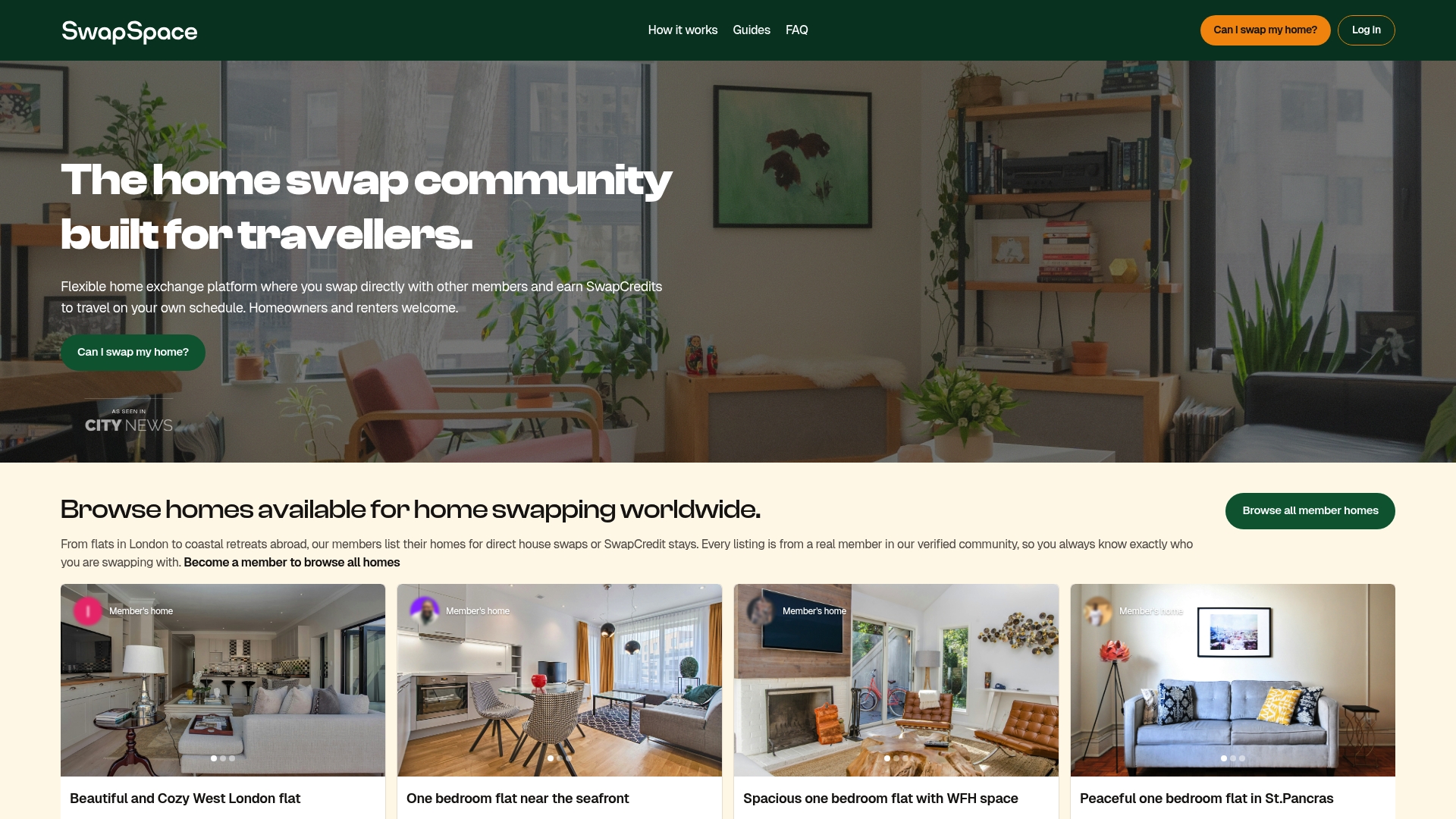
The SwapSpace platform connects homeowners and renters with a global network of verified members, from city flats to countryside retreats. Whether you are planning a family holiday, a remote working stint abroad, or a retirement adventure, the process is designed to be clear and reassuring from the first listing to the final review. Explore how SwapSpace works and take the first step towards travel that costs less and feels more genuine.
Frequently asked questions
How do I know if a home swap platform is secure?
Look for robust verification and transparency, including ID checks, home ownership confirmation, active review systems, and written agreement tools. Avoid any platform that does not require identity verification or that permits off-platform payments.
Does home swapping include insurance?
Platforms do not insure your property; you must arrange cover through your own home or travel insurance policy. Check your existing policy for guest cover before your first swap and extend it if necessary.
What happens if something gets damaged?
Serious incidents are rare; review systems create strong reputational incentives for careful behaviour, and personal insurance can provide cover in the unlikely event of significant damage.
Can renters participate in secure home swaps?
Yes, but renters must seek landlord approval in writing before listing their home for exchange. Without that permission, participating in a swap could breach the terms of a tenancy agreement.
What is a non-simultaneous swap?
Credit-based swaps allow you to host a guest at one time and use the credits earned to travel at a different time, removing the need to coordinate dates with a single partner simultaneously.
