

TL;DR:
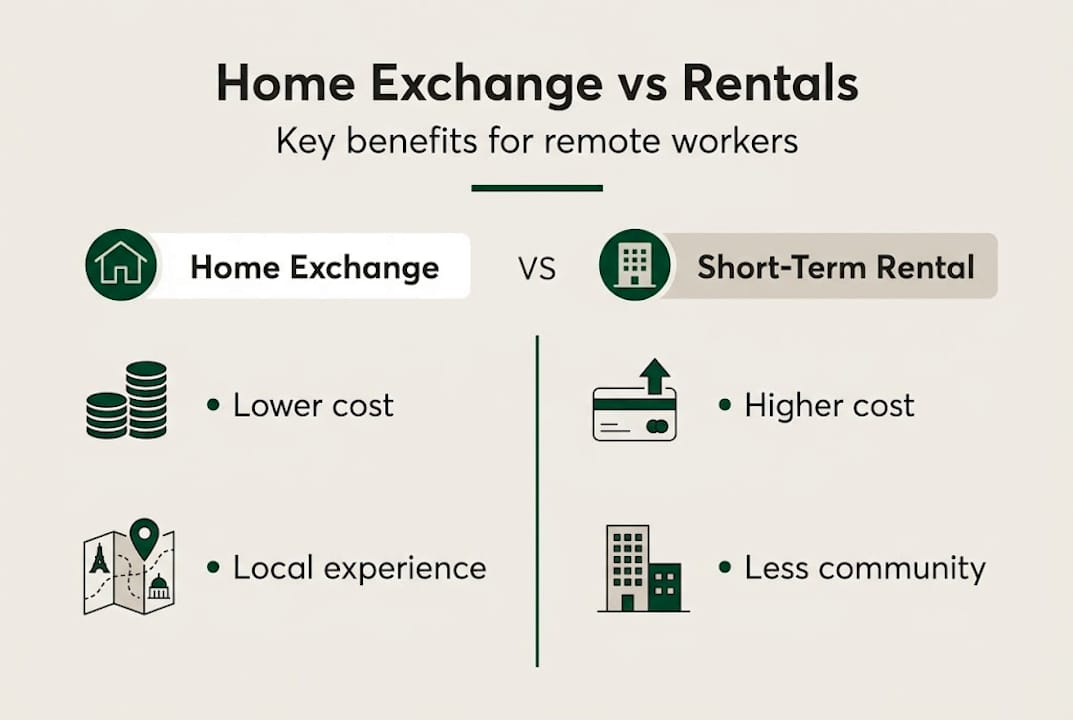
- Home exchange offers affordable, authentic living spaces ideal for remote workers seeking local immersion.
- Platforms like HomeExchange, PLU, and Swaphouse vary in size, community focus, and cost, fitting different needs.
- Successful home swaps depend on clear communication, detailed listings, identity verification, and careful preparation.
Remote work promises freedom, but the reality often includes a stubborn cost that rarely gets discussed: accommodation. Hotels eat into daily rates, short-term rentals add up faster than expected, and the dream of working from anywhere quietly becomes expensive. Home exchange offers a genuinely different path. By swapping your home with another verified member, you eliminate the single largest travel expense while gaining something hotels simply cannot provide: a real home, in a real neighbourhood, with a kitchen, a desk, and the texture of local life around you. This guide covers how home exchange works, how platforms compare, and how to make your first swap confidently.
Table of Contents
- What is home exchange and why does it matter for remote workers?
- Comparing leading home exchange platforms for remote work
- How to get started with your first home swap
- Top tips for remote workers: Living well during a home exchange
- The overlooked power of home exchange for remote work freedom
- Find your next exchange with SwapSpace
- Frequently asked questions
Key Takeaways
| Point | Details |
|---|---|
| Home exchange explained | Swapping homes is a proven way for remote workers to travel affordably and live authentically. |
| Platform comparison | Choose between scale, community feel, and specialised features to suit your work-travel style. |
| Steps to join | Listing your home and following safety tips makes getting started smooth and secure. |
| Productivity tips | Small adjustments can help you work effectively and enjoy your stay during exchanges. |
| SwapSpace resources | SwapSpace provides tools, support, and a trusted network for successful exchanges. |
What is home exchange and why does it matter for remote workers?
Home exchange is exactly what it sounds like: two parties agree to stay in each other’s homes, either simultaneously or at different times. There are two main models. In a direct swap, both parties travel at the same time and stay in each other’s property. In a non-simultaneous swap, one person stays in another’s home while earning points or credits that they redeem for a future stay elsewhere. The points-based model is particularly useful for remote workers whose schedules rarely align neatly with someone else’s.
For remote workers specifically, the value goes well beyond saving money. Consider what a home exchange actually provides:
- A proper workspace. Most homes have a table, reliable broadband, and a quiet room. You are not competing with a hotel lobby or a noisy café.
- Cost savings on accommodation. Compared to cost and immersion compared to hotels, home exchange removes nightly fees entirely.
- Flexibility. Points-based systems let you travel on your own schedule rather than coordinating exact dates with another member.
- Local immersion. You live in a neighbourhood, shop at local markets, and experience a place that belongs somewhere rather than a branded corridor.
- Community. Many platforms connect members who share values around trust, reciprocity, and sustainable travel.
Risks exist, as they do with any travel arrangement, but they are manageable. Established platforms use identity verification, member reviews, and in some cases insurance or damage deposits to protect both parties. Best for remote workers are platforms like HomeExchange for scale and flexibility, and People Like Us (PLU) for community and authenticity, both of which have robust trust systems in place.
“The biggest shift home exchange requires is not logistical, it’s psychological. Once you trust the process, the practical side is straightforward.”
Pro Tip: If your home is in a city centre or near a popular destination, list it first. Desirable locations earn points faster and attract more swap requests, giving you more options from the outset.
Comparing leading home exchange platforms for remote work
Now that you know what home exchange is and why it’s valuable, let’s see how the main platforms compare.
Three platforms dominate the conversation for remote workers in 2026: HomeExchange, People Like Us (PLU), and Swaphouse. Each has a distinct character, and choosing the right one depends on how you work and travel.
HomeExchange is the largest network, with 360,000 listed homes across more than 145 countries. Its points system (called GuestPoints) gives members flexibility to travel without needing a simultaneous swap partner. An annual membership fee applies, but Reddit users note it pays off after just one or two trips compared to equivalent rental costs. The sheer volume of listings makes it the strongest choice for frequent travellers who want maximum options.
People Like Us (PLU) takes a different approach. It is smaller and more curated, built around a genuine sense of community. It holds a 4.9 out of 5 rating on Trustpilot from over 1,000 reviews, which is a meaningful signal of member satisfaction. PLU charges an annual fee and focuses on quality over quantity. Remote workers who value trust and personal connection tend to prefer it.
Swaphouse is free to use and targets digital nomads directly. It is smaller and the interface is more basic, but for remote workers just starting out, the absence of a membership fee lowers the barrier to entry considerably.
| Feature | HomeExchange | People Like Us | Swaphouse |
|---|---|---|---|
| Network size | 360,000+ homes | Curated, smaller | Small but growing |
| Cost | Annual membership | Annual fee | Free |
| Community feel | Moderate | Very strong | Nomad-focused |
| Points system | Yes (GuestPoints) | Yes | No |
| Best for | Frequent travellers | Trust-focused swappers | First-timers, nomads |
For those exploring homeswap.com alternatives, it is worth noting that no single platform suits everyone. Your working style matters: if you need a large city network and travel often, HomeExchange wins on volume. If you want to feel part of a trusted circle, PLU is hard to beat. Understanding the full house swap workflow before committing to a platform also helps you choose more confidently.
How to get started with your first home swap
Once you’ve found the right platform for your needs, here’s how to initiate your first swap confidently.
The process is more straightforward than most people expect. Breaking it into clear steps removes the uncertainty that puts many remote workers off.
- Create a compelling listing. Write an honest, detailed description of your home. Include photos of the workspace, broadband speed, and any local highlights. Desirable home locations earn points faster, so emphasise what makes your area attractive.
- Verify your identity. Most platforms require ID verification before you can send or receive swap requests. Complete this early.
- Choose your platform. Based on the comparison above, select the platform that fits your travel frequency and community preference.
- Browse and initiate contact. Search for homes in your target destination and send personalised messages. Generic requests rarely convert.
- Negotiate terms clearly. Agree on dates, house rules, pet arrangements, and any specific needs before confirming.
- Prepare your home. Clear personal valuables, leave clear instructions for appliances and internet, and prepare a welcome guide for your guest.
For a thorough walkthrough, the safe, affordable swaps step-by-step guide covers every stage in detail. It is also worth reviewing the essential platform features to understand what a trustworthy platform should offer before you sign up.
“Clear communication before the swap prevents almost every problem that arises during one. The more you share upfront, the smoother the stay.”
Pro Tip: Use the checklists and message templates that most platforms provide. They are designed to cover the details first-time swappers commonly overlook, such as emergency contacts and bin collection days.
Top tips for remote workers: Living well during a home exchange
Getting established in your new space is easier with a few practical tips.
Arriving at someone else’s home with a full work schedule ahead requires a bit of intention. The first hour matters. Test the internet speed immediately, locate the router, and confirm the password matches what was shared. Set up your workspace before unpacking anything else. A clear desk and a reliable connection are non-negotiable for productive remote work.
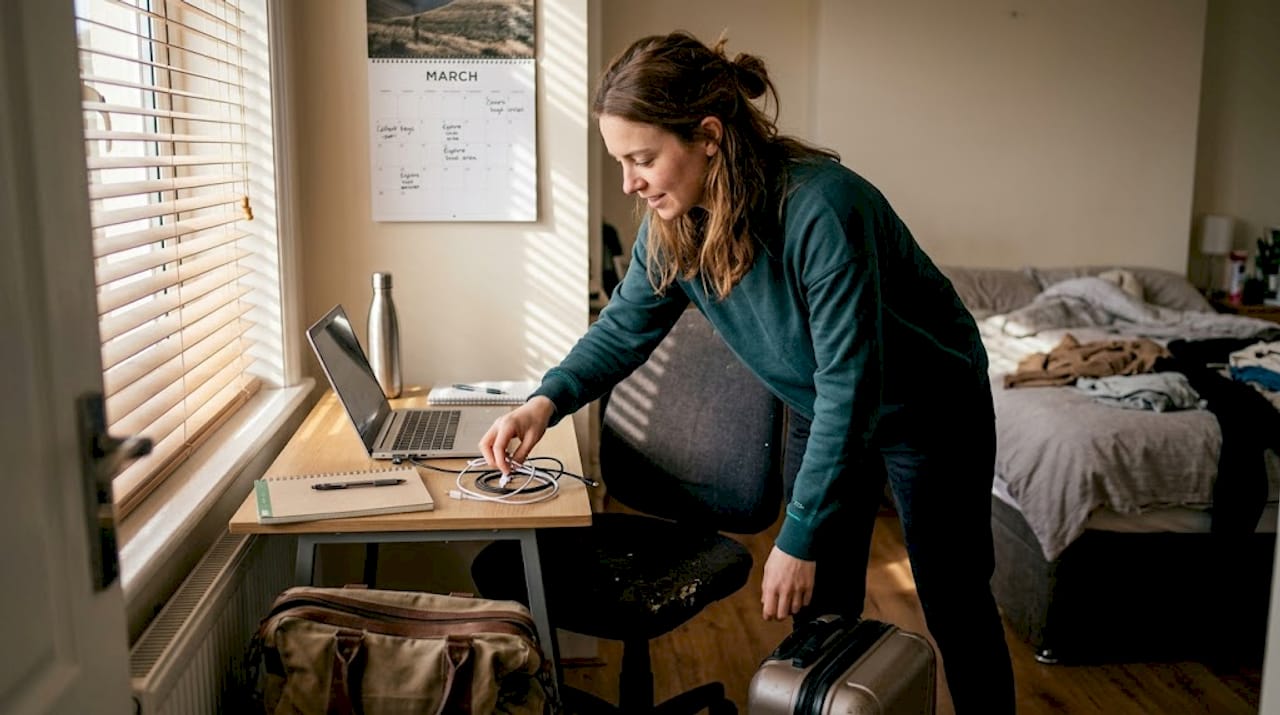
Communication with your host before and during the stay keeps things smooth. A quick message on arrival to confirm everything is in order is courteous and practical. If something is unclear or broken, raise it early rather than letting it fester.
Platform reviews and verification show that damage is rare and usually covered by the platform, while unusual guest behaviour is even rarer and largely mitigated by the review system. The community self-regulates effectively.
| Do | Don’t |
|---|---|
| Test internet on arrival | Assume Wi-Fi details are obvious |
| Leave the home as you found it | Invite additional guests without asking |
| Follow the host’s house rules | Ignore instructions for appliances |
| Communicate promptly if issues arise | Wait until checkout to report problems |
| Explore the local neighbourhood | Stay indoors and miss the local experience |
Making the most of local life is, after all, one of the primary reasons to choose home exchange over a hotel. Shop where locals shop, walk routes that aren’t on tourist maps, and use your host’s recommendations. The manage your exchange safely guide also covers how to handle edge cases, from minor damage to early departures.
Pro Tip: Leave a printed note near the router with the Wi-Fi password, your contact number, and a brief guide to the three or four appliances guests most commonly ask about. Your guests will appreciate it, and you’ll receive fewer messages mid-trip.
The overlooked power of home exchange for remote work freedom
With the practicalities covered, it is worth considering why home exchange remains something of a secret weapon for remote professionals.
Despite the clear financial and experiential advantages, home exchange still sits in the shadow of short-term rental platforms and hotel loyalty programmes. Most remote workers default to what they know, even when it costs significantly more. This is partly habit and partly a trust gap that the major platforms have largely already closed.
What conventional wisdom tends to underestimate is the network effect. Every successful swap builds a reputation, and a strong profile opens doors to hidden gems for home exchange that never appear on mainstream booking sites. The cultural immersion is deeper too. Staying in a real home, in a real street, changes how you experience a place. It is not just cheaper; it is richer.
Remote workers are also uniquely positioned to shape how home exchange evolves. With flexible schedules and a genuine need for affordable long-stay options, they represent the ideal home exchange member. Trying multiple platforms, leaving detailed reviews, and engaging with the community actively accelerates the movement and improves the experience for everyone involved.
Find your next exchange with SwapSpace
If you’re ready to join the next wave of work-and-travel living, here’s how SwapSpace can help.
SwapSpace is a trusted home exchange platform built for people who want to travel affordably without sacrificing comfort or community. Whether you are planning your first swap or looking to build a regular rotation of destinations, the platform connects verified members with homes worldwide.
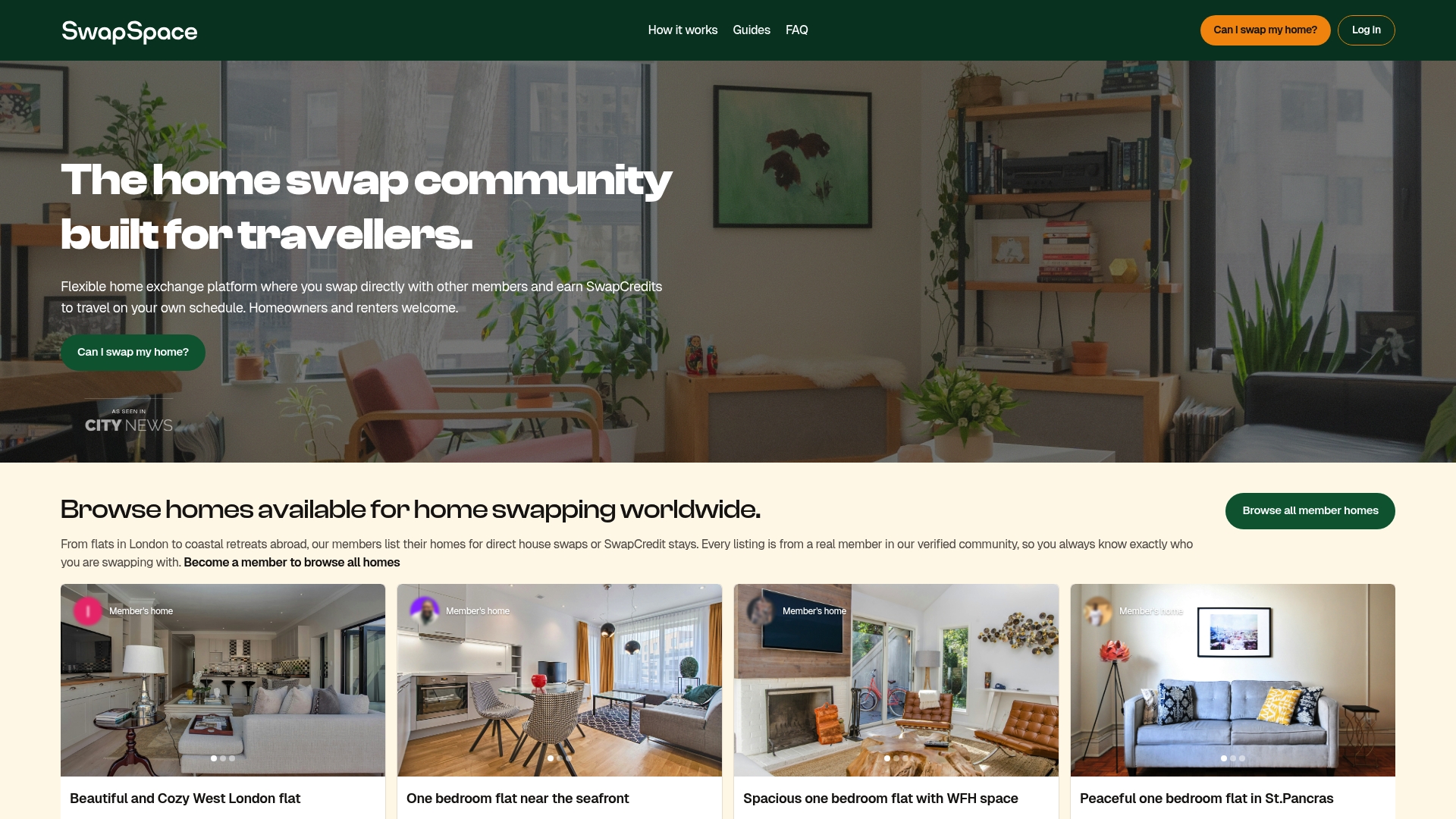
Use the instant travel cost calculator to see exactly how much you could save compared to traditional accommodation. Then explore how SwapSpace works to understand the membership model, the credit system, and the identity verification process that keeps every exchange safe. Your next destination is already listed.
Frequently asked questions
Is home exchange safe for solo remote workers?
Yes. Most platforms use reviews and verification as standard, alongside insurance options, making home exchange a well-protected choice for solo travellers.
What is the typical cost of using a home exchange platform?
Most platforms charge an annual membership or modest fees, and pays off after 1-2 trips when compared to equivalent short-term rental costs.
Can I work remotely from any country during a home exchange?
You can swap to most countries, but check visa requirements and confirm internet reliability with your host before finalising the arrangement.
Do all platforms suit digital nomads?
Swaphouse targets digital nomads specifically, while HomeExchange and PLU serve a broader audience that includes families and retirees.
What’s the fastest way to secure my first swap?
List a desirable property, respond quickly to incoming requests, and consider using more than one platform to maximise your chances early on.
