

TL;DR:
- Home exchange offers New Yorkers the chance to save costs and experience authentic, local stays by swapping homes instead of booking hotels. The process involves creating a profile, listing your property, and choosing between reciprocal or credit-based exchanges, with non-simultaneous stays often more flexible. Using verified platforms like SwapSpace or HomeExchange enhances safety and trust, unlocking meaningful travel experiences rooted in community and local immersion.
For New Yorkers who love to travel, the maths rarely adds up. Hotels in popular destinations can easily cost £200 to £400 per night, short-term rentals come with mounting service fees, and the experience often feels transactional and impersonal. Home exchange offers a genuinely different path. By swapping your New York flat or house with another verified member’s property, you eliminate accommodation costs entirely while gaining a lived-in, local experience that no hotel can replicate. This guide walks you through everything you need to know, from how exchanges work to choosing the right platform and listing your own home effectively.
Table of Contents
- How home exchange works in New York
- Best home exchange platforms for New York travellers
- Comparing house swap options: flexibility, cost and ease
- Preparing and listing your New York home for exchange
- Why home exchange unlocks true New York experiences
- Start your home exchange journey with SwapSpace
- Frequently asked questions
Key Takeaways
| Point | Details |
|---|---|
| Home exchange saves money | Swapping homes can drastically reduce your travel accommodation costs compared to hotels. |
| GuestPoints boost flexibility | Using GuestPoints allows non-simultaneous stays for more travel freedom in New York. |
| Preparation is key | Listings with clear photos and thorough preparation result in smoother exchanges and happier guests. |
| Trusted platforms matter | Choosing reputable platforms ensures safer, more reliable home exchange experiences. |
How home exchange works in New York
Home exchange, at its core, is a straightforward concept: you offer your home to another traveller while staying in theirs. No money changes hands for accommodation. What makes it particularly appealing for New Yorkers is the obvious draw of your location. A flat in Brooklyn, a brownstone in Harlem, or even a modest studio in Queens represents enormous value to international travellers who want to experience the city authentically, without paying Manhattan hotel rates.
Understanding affordable travel concepts helps set realistic expectations before you begin. The process typically works in a few clear stages: you create a detailed profile, list your home with photographs and a description, then browse available properties and propose an exchange with another member. Most platforms support two main exchange modes: reciprocal swaps, where both parties exchange homes at the same time, and non-reciprocal stays, where GuestPoints (a credit system used by some platforms) allow you to host at one time and stay elsewhere at a different time.
For New Yorkers, the non-reciprocal model is often more practical. Your schedule may not align perfectly with another member’s availability, and earning credits by hosting first gives you flexibility. You can host a couple from Paris for a week in spring, bank those credits, and use them to stay in a listed property in Lisbon the following autumn. The beauty of this system is that it decouples the timing pressure from the exchange itself.
Here is a summary of what home exchange offers New York residents specifically:
- Dramatic cost savings: Eliminating nightly accommodation fees can save hundreds or even thousands of pounds per trip.
- Local immersion: Staying in a real neighbourhood, with a kitchen, local shops, and genuine community atmosphere, transforms a holiday into something far more meaningful.
- Your home earns value: Your New York property, regardless of size, is a sought-after asset on any global home exchange network.
- Flexibility of exchange type: Choose a direct simultaneous swap or use credits to stay anywhere at your preferred time.
Pro Tip: Before listing your home, browse exchanges in your target destination to confirm there is genuine demand. If you see multiple listings in Rome or Cape Town that match your travel window, you know the platform has active members there.
For those newer to the process, a step-by-step exchange guide can help you understand each stage, from submitting your profile to confirming your first swap.
Best home exchange platforms for New York travellers
After understanding the mechanics, the next practical question is which platform to use. Not all platforms serve New York travellers equally. Some have larger member bases in Europe, which suits those planning transatlantic trips. Others offer stronger verification processes or better credit systems. Here is a look at the main options worth considering.
SwapSpace is a growing, invite-only community focused on verified members and authentic exchanges. It is designed to feel trustworthy from the first interaction, with identity verification built into the onboarding process. For New York travellers seeking security alongside flexibility, SwapSpace’s structure is particularly appealing. It currently offers free membership, making it a low-risk starting point.
HomeExchange is one of the most established names in the space, with a substantial global member base. Membership unlocks access to searching and initiating exchanges, and GuestPoints are earned by hosting and used to finalise non-simultaneous, non-reciprocal stays. Its large network means good coverage in popular destinations across Europe, North America, and beyond.
Other platforms worth considering, depending on your travel goals, include options reviewed in our homeswap.com alternatives and swapstay.io alternatives articles, which examine a broader range of community-based exchange services. Families with specific space or amenity requirements may also find our guide to house exchange sites for families useful.
| Platform | Membership cost | Exchange types | Verification | Best for |
|---|---|---|---|---|
| SwapSpace | Free (initially) | Direct swaps and credit stays | Identity verified | Safety-conscious travellers |
| HomeExchange | Annual fee | Reciprocal and GuestPoints | Profile-based | Large network access |
| Other platforms | Varies | Varies | Varies | Niche travel needs |
Pro Tip: If you are new to home exchange, start with a platform that offers identity verification as a standard feature rather than an optional add-on. Knowing who is in your home matters as much as knowing where you will be staying.
Key features to evaluate when choosing a platform:
- Member verification depth: Are identities actually confirmed, or just self-declared?
- Network size in your target destinations: Does the platform have active listings in the cities or countries you want to visit?
- Exchange flexibility: Can you do non-simultaneous stays, or only direct swaps?
- Support and mediation: Is there a team to assist if something goes wrong?
- Cost relative to savings: Even a paid annual membership is likely far cheaper than a single hotel night.
Comparing house swap options: flexibility, cost and ease
Having introduced the main platforms, it is worth taking a closer look at what genuinely distinguishes them in practice, particularly around flexibility, costs, and ease of use for New York-based members.

The most important structural distinction is between simultaneous and non-simultaneous exchanges. A simultaneous exchange means you and your swap partner occupy each other’s homes during the same dates. This works well when schedules align naturally, and it avoids any point system entirely. However, finding an exact date match with a suitable partner can be more challenging.
Non-simultaneous exchanges solve this problem. GuestPoints are earned by hosting other travellers and then used to stay in different homes at a later date, with no requirement for the other party to use your home at the same time. This introduces real scheduling freedom, particularly useful for New Yorkers whose work commitments make it difficult to commit to specific travel windows far in advance.
“Home exchange is not just a money-saving tactic. It is a way to experience the world as a resident rather than a tourist. You shop at local markets, take neighbourhood walks, and build relationships with hosts that can last years.” This sentiment, shared by experienced home exchange members, captures what sets the model apart from every other form of accommodation.
Here is a cost comparison of the main exchange models:
| Factor | Simultaneous swap | Non-simultaneous (credits) | Traditional rental |
|---|---|---|---|
| Nightly accommodation cost | £0 | £0 (credits used) | £150 to £400+ |
| Platform membership fee | Annual (varies) | Annual (varies) | None (but service fees apply) |
| Scheduling flexibility | Low to moderate | High | High |
| Local immersion | High | High | Moderate |
| Verification and trust | Platform-dependent | Platform-dependent | Varies widely |
For tips on making the most of your exchange arrangements, our article on flexible exchange tips is worth reading before you commit to a particular platform or exchange type.
The takeaway for New Yorkers is clear. If your travel schedule is predictable and you can plan well in advance, a simultaneous swap is the simplest and most cost-effective route. If your availability shifts frequently, building up a reserve of credits through hosting gives you far more control over when and where you travel.
Preparing and listing your New York home for exchange
Now that you understand what to compare, it is time to think practically about getting your own home ready for exchange. A well-prepared listing attracts better matches, leads to smoother stays for your guests, and ultimately earns you more credits or reciprocal exchanges.
Follow these key steps to get started:
- Declutter and deep clean. Your home does not need to be a showroom, but it should feel welcoming and tidy. Remove any valuable or irreplaceable items and ensure storage is clearly available for your guests’ belongings.
- Photograph every room in good natural light. Quality images are the single biggest factor in whether potential swap partners choose your listing. Photograph the kitchen, living areas, bedrooms, bathroom, and any outdoor space.
- Write a detailed, honest description. State the size, layout, and exact neighbourhood. Mention nearby transport links, supermarkets, and local highlights. New York’s transport network is a genuine selling point.
- List all amenities clearly. Wifi, laundry facilities, parking availability, and whether pets or children are welcome. The more specific you are, the fewer awkward conversations arise later.
- Prepare a local guide. Include your favourite restaurants, coffee shops, parks, and cultural venues in the surrounding area. This small addition makes your listing stand out and gives guests a genuinely richer experience.
Our stress-free home prep guide covers the practical side in depth, while the listing step-by-step guide walks you through the profile-building process on most platforms. Before your guests arrive, review the vacation home exchange checklist to confirm everything is in order.
Essential items to include in your listing:
- Accurate location details with nearby subway or bus lines noted
- Sleeping capacity including any sofa beds or air mattresses available
- House rules around smoking, noise, and visitor policies
- Emergency contact information and any building-specific instructions
- Seasonal considerations such as air conditioning availability in summer
Membership unlocks access to the full member search and exchange tools, so completing your listing is the gateway to engaging with the wider community. An incomplete listing will hold you back, regardless of how desirable your location is.
Pro Tip: Highlight what makes your neighbourhood uniquely New York. Whether that is proximity to a particular park, a celebrated food market, or an independent arts scene, local character is exactly what home exchange travellers are seeking. Generic descriptions lose enquiries to more vivid, specific ones.
Why home exchange unlocks true New York experiences
Here is something the conventional travel industry rarely admits: the accommodation you choose shapes your experience more than the destination itself. Two people can visit the same city and have completely different trips, not because of what they saw, but because of where they stayed and how they felt when they returned each evening.
Hotels are efficient and comfortable, but they are also sealed off from the real city. You see your destination from the outside. Home exchange flips this entirely. When you stay in a genuine local home, you inhabit the city differently. You walk to the same bakery your host recommends. You take the same subway line, use the same parks, and overhear the same neighbourhood rhythms. It is a qualitatively different kind of travel.
For New Yorkers hosting international guests, the benefit runs the other way. You contribute to someone else’s authentic experience of your city, and that sense of mutual generosity creates a form of trust that feels rare in modern travel. Most experienced home exchangers report that the relationships built through these stays, maintained through messages and occasional return visits, are among the more rewarding aspects of the whole model.
There is also an honest safety argument to be made. A verified, credit-based community like SwapSpace means your guests are accountable members who have themselves hosted or been hosted. That accountability, built into the platform’s architecture, creates a baseline of trust that a standard short-term rental booking simply cannot match. When exploring smart travel with home exchanges, this community-driven trust is consistently one of the factors members cite as most valuable.
The uncomfortable truth that most travel content sidesteps is this: immersive, affordable, and safe travel is not primarily about finding the right destination. It is about finding the right model. Home exchange, done thoughtfully, is that model.
Start your home exchange journey with SwapSpace
If this guide has shifted how you think about affordable travel from New York, the natural next step is finding a platform that matches your values around trust, community, and genuine local experience.
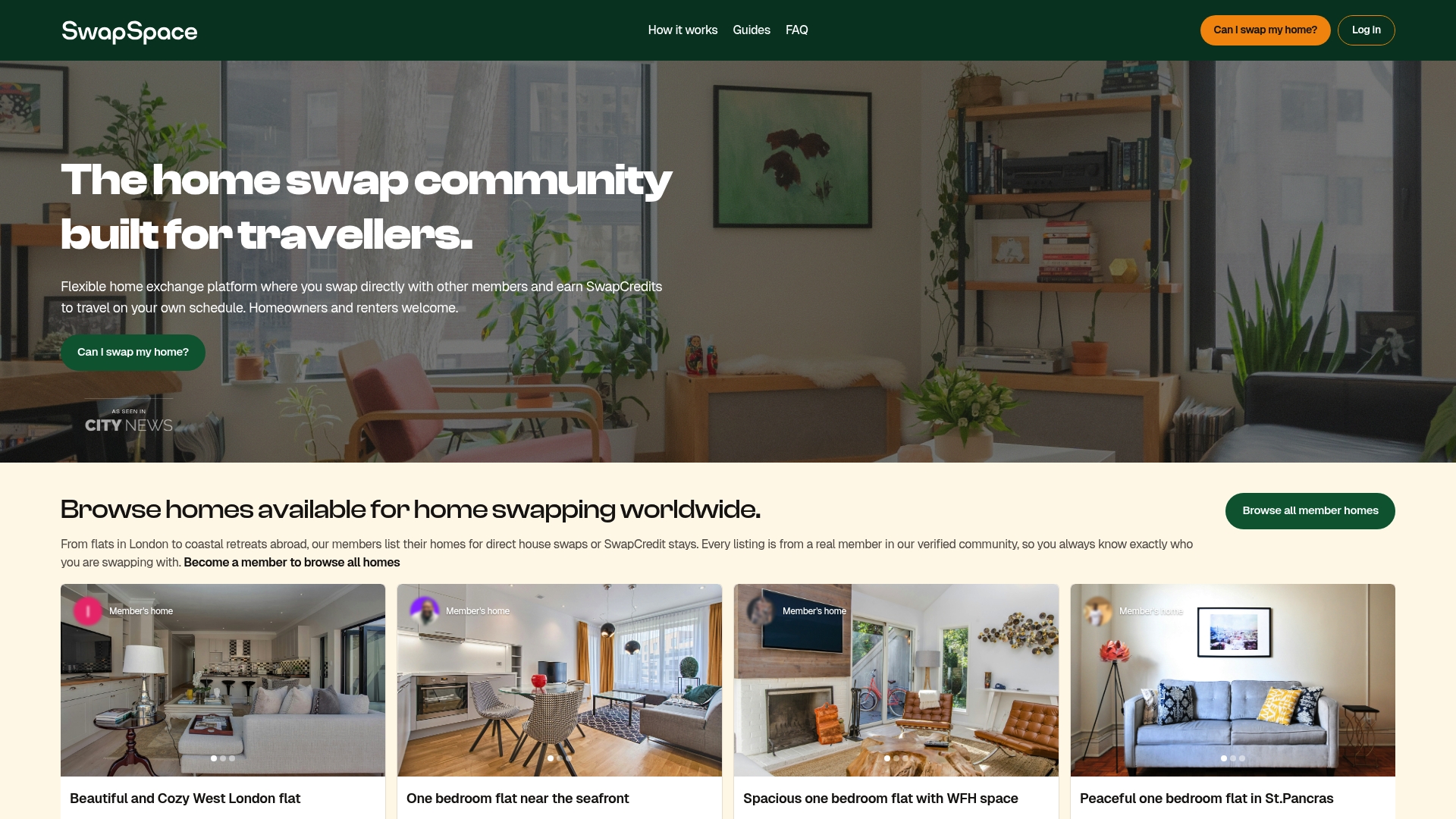
SwapSpace is built precisely for travellers who want more than a transaction. As a verified, invite-only community, it connects members who have confirmed their identities and listed their homes in good faith. Whether you are a Brooklyn renter with a desirable flat or a homeowner in the outer boroughs, your space has real value on a global exchange network. Join SwapSpace to list your home and start browsing destinations worldwide, or visit the how SwapSpace works page to understand exactly what to expect from your first exchange. Membership is currently free, making this the most accessible moment to start.
Frequently asked questions
What is the difference between reciprocal and non-reciprocal home exchanges?
A reciprocal exchange means both parties swap homes simultaneously, while non-reciprocal stays use GuestPoints, allowing flexible timing between exchanges. Both exchange modes are widely supported across major platforms.
How can I earn GuestPoints for home exchange?
You earn GuestPoints by hosting other travellers in your home, and those points can then be used to stay in a different member’s property at a time that suits you. GuestPoints earned by hosting are the foundation of non-simultaneous exchange arrangements.
Are home exchanges safe in New York?
Most reputable platforms verify member profiles and listings, but thorough preparation, clear house rules, and following a reliable checklist will further protect both you and your guests.
What costs are involved with home exchange platforms?
Platforms typically charge an annual membership fee, while hosting earns you credits for future non-reciprocal stays. Membership unlocks access to the full search and exchange tools, making it a cost-effective investment against what you save on accommodation.
How do I list my New York home for exchange?
Create a detailed profile on your chosen platform with quality photographs, an honest description of your space and neighbourhood, a full amenities list, and any house rules, then follow a recommended preparation checklist before your first guests arrive.
