

TL;DR:
- Home swapping offers a cost-effective alternative to hotels with options in cities and rural areas.
- Choice depends on travel needs, space, outdoor access, and logistical considerations.
- Successful swaps rely more on host compatibility and communication than location alone.
Home swapping has grown from a niche travel concept into a genuinely practical alternative to hotels and short-term rentals, with 360,000 listings worldwide and an average saving of $150 to $400 per night compared to conventional accommodation. But one question divides first-time and experienced swappers alike: should you target a city flat or a rural retreat? Each environment shapes your holiday differently, from daily logistics and budget calculations to the overall texture of the experience. This guide lays out a clear framework for making that choice, so you can match the right setting to your travel style, party size, and financial goals.
Table of Contents
- Key criteria for choosing your ideal home swap
- What you gain with a city home swap
- Why choose a countryside exchange?
- City versus countryside: Direct comparison
- What most guides forget: The ‘fit’ matters more than destination
- Ready to try your first home swap?
- Frequently asked questions
Key Takeaways
| Point | Details |
|---|---|
| Choose by priority | Location, amenities, and lifestyle needs should guide your swap decision more than city or countryside labels. |
| City swaps save big | Staying in urban homes can offer significant savings and greater swap match opportunities. |
| Rural escapes grow | Countryside swaps are more popular, ideal for nature and relaxation but require extra planning. |
| Flexibility wins | Using points systems helps you land the best swap, even without a direct property match. |
| Preparation is key | Top experiences come from clear communication, honest profiles, and thoughtful planning. |
Key criteria for choosing your ideal home swap
Before browsing listings, it helps to work through a structured set of questions. The city versus countryside debate is rarely settled by preference alone. Practical factors often prove just as decisive.
Here are the six core criteria to weigh before committing to either environment:
- Location preference. Consider whether you value cultural proximity, walkable amenities, and public transport, or whether open space, quiet, and nature matter more to your group.
- Travel party needs. Families with young children often benefit from gardens and low-traffic streets. Pet owners will find countryside homes far more accommodating. Travellers with mobility requirements may prefer urban settings with level access and nearby services.
- Travel timing. Peak seasons affect both environments differently. Rural areas in popular regions fill up quickly during summer and school holidays. Cities experience surges around major events and festivals, which can affect swap availability on both sides.
- Daily logistics. Urban swaps typically offer walkability and public transport. Countryside homes almost always require a car, and internet connectivity can vary significantly. Factor in grocery access, car hire costs, and any dependency on reliable broadband if you are working remotely.
- Swap availability and flexibility. Understanding how swap systems operate matters here. Non-reciprocal points systems, which allow you to host independently and earn credits for future stays, open up a much wider range of options, particularly if your home is in a less sought-after location.
- Realistic budgeting. Home swapping eliminates accommodation costs, but additional expenses vary. City swaps may involve cleaning fees or parking charges. Countryside swaps can require car hire, professional cleaning, and additional insurance considerations.
Following a house swap planning workflow before you list or apply significantly reduces last-minute surprises. Platform data suggests households complete an average of 2.7 swaps per year, which means a well-prepared approach pays dividends across multiple trips.
Pro Tip: Write down your non-negotiables before you open a single listing. Knowing your deal-breakers in advance, whether that is a garden, a spare bedroom, or fast broadband, saves considerable time and prevents mismatched expectations.
With decision criteria in mind, let us explore the option of swapping to a home in the heart of the city.
What you gain with a city home swap
Urban home swaps offer something that no hotel room can replicate: the genuine feeling of living in a neighbourhood rather than visiting it. You shop at the same market, walk the same streets, and settle into a place that belongs somewhere specific.
The practical advantages are substantial:
- High swap value. City homes, particularly those in central districts of London, Paris, or New York, are consistently in high demand on exchange platforms. Saving up to $2,000 in a single week in New York compared to hotels is a realistic outcome for verified swappers.
- Easier to find matches. Urban listings attract more interest, which means shorter waiting times and more choice when browsing reciprocal swap requests.
- Walkability and convenience. Restaurants, museums, transport links, and grocery shops are typically within easy reach, reducing daily spend and logistical effort.
- Suited to shorter trips. City swaps work particularly well for long weekends, cultural breaks, and family city visits where maximising sightseeing time matters.
The potential drawbacks are worth naming honestly. City homes are often smaller, with limited storage, shared parking, or no outdoor space. Noise levels can be higher, particularly in central areas. Some listings include cleaning fees that partially offset the accommodation saving. For saving money on swaps in urban markets specifically, your profile strength and response rate matter enormously.
“A well-maintained city listing with clear photos and an active profile can attract swap requests from multiple destinations within weeks of joining a platform.”
Pro Tip: Invest time in building a thorough, honest host profile. Highlight transport links, nearby attractions, and any quirks of the property. City swappers in particular read profiles carefully before committing, and swap safety for city homes is a common concern that a well-written profile can directly address.
Having seen the appeal of the city, let us examine the possibilities and considerations for countryside home swaps.
Why choose a countryside exchange?
A rural home swap delivers something fundamentally different: space, tranquillity, and a slower pace that genuinely resets the rhythm of daily life. For families, pet owners, and remote workers in particular, a countryside exchange can feel less like a holiday and more like a proper change of scene.
The key advantages of rural swaps include:
- Access to nature and outdoor space. Gardens, walking routes, and open landscapes are standard features rather than rare luxuries. For children and pets, this transforms the daily experience.
- Lower background costs. Rural areas tend to involve fewer incidental spending temptations, meaning your overall trip budget often remains more controlled.
- Longer average stays. Longer stays in rural swaps are growing in popularity, which suits remote workers and retirees looking for extended breaks rather than brief trips.
- Genuine digital detox potential. A countryside setting encourages slower, more intentional days, which is difficult to achieve in a busy city flat.
The trade-offs require honest planning. Countryside swaps can face peak-season competition, particularly in regions like Provence during lavender season or the Cotswolds in summer, and listings in popular rural areas fill quickly. A car is almost always essential. Internet quality varies considerably, so if remote work is part of your stay, verify connectivity before confirming.
“Leave a detailed welcome pack for guests arriving from cities. Clear directions, transport options, local shop hours, and countryside-specific tips make an enormous difference to guest comfort.”
Reviewing security considerations for countryside swaps before hosting is advisable, particularly regarding insurance coverage and what happens if a guest requires emergency assistance in a remote location.
Now that we know the distinctive advantages of each swap type, let us bring together the comparison side by side.

City versus countryside: Direct comparison
Choosing between the two environments becomes clearer when you examine specific priorities. The table below summarises the key variables:
| Factor | City swap | Countryside swap |
|---|---|---|
| Ease of finding matches | High | Moderate to low |
| Average stay length | Short to medium | Medium to long |
| Car required | Rarely | Almost always |
| Space and outdoor access | Limited | Generous |
| Savings versus hotels | Up to $2,000+ per week | Varies by region |
| Best suited to | Culture seekers, couples, families on city breaks | Families, pet owners, remote workers, retirees |
| Peak season pressure | Event-driven | School holidays and summer |
Platforms using points systems and non-reciprocal flexibility help users swap across different lifestyles, meaning you are not restricted to swapping like-for-like. A rural homeowner can accumulate credits by hosting and redeem them for a city stay, and vice versa.
In high-cost urban markets, savings can reach $5,000 per week compared to luxury hotels. That figure makes a compelling case for city swaps when the destination is expensive. Rural swaps, by contrast, tend to offer savings through extended stays and lower supplementary spending rather than headline nightly rates.
To make a confident final decision, work through these four questions:
- What is the primary purpose of your trip: cultural immersion, relaxation, remote work, or family time?
- Does your travel party need outdoor space, a garden, or flexible daily structure?
- How important is walkability and proximity to restaurants, museums, or public transport?
- Are you willing to hire a car and plan logistics more carefully in exchange for more space and tranquillity?
Exploring top home exchange platforms alongside SwapSpace can also help you understand how listing density varies by region, which directly affects how quickly you find matches in either environment.
The landscape is now clear, but what about the subtler lessons experienced swappers learn? Let us shift from facts to deeper perspective.
What most guides forget: The ‘fit’ matters more than destination
Most comparisons between city and countryside swaps focus on logistics and savings. Both matter. But experienced swappers consistently point to something less obvious: the quality of a swap depends far more on who you are exchanging with than where the home is located.
Compatibility, openness, and clear communication between swapping parties consistently determine whether an exchange feels comfortable or stressful. A spotless countryside cottage can still be a disappointing swap if expectations around pets, children, or cleanliness were never discussed. A compact city flat can be a genuinely memorable experience if the hosts have left thoughtful notes, honest information, and a warm welcome pack.
Following a step-by-step safe swap guide reinforces this. The checklist items that matter most are often the human ones: clear communication about house rules, accessibility needs, and pet arrangements. Building a review history on your profile is equally important, as it signals trustworthiness to future swap partners regardless of whether your home is urban or rural.
The perfect swap is as much about people and preparation as it is about the postcode.
Ready to try your first home swap?
Whether you are drawn to the energy of a city neighbourhood or the calm of a rural landscape, home swapping removes the single largest barrier to travel: accommodation cost. SwapSpace connects verified members across both environments, with listings ranging from city flats to countryside retreats.
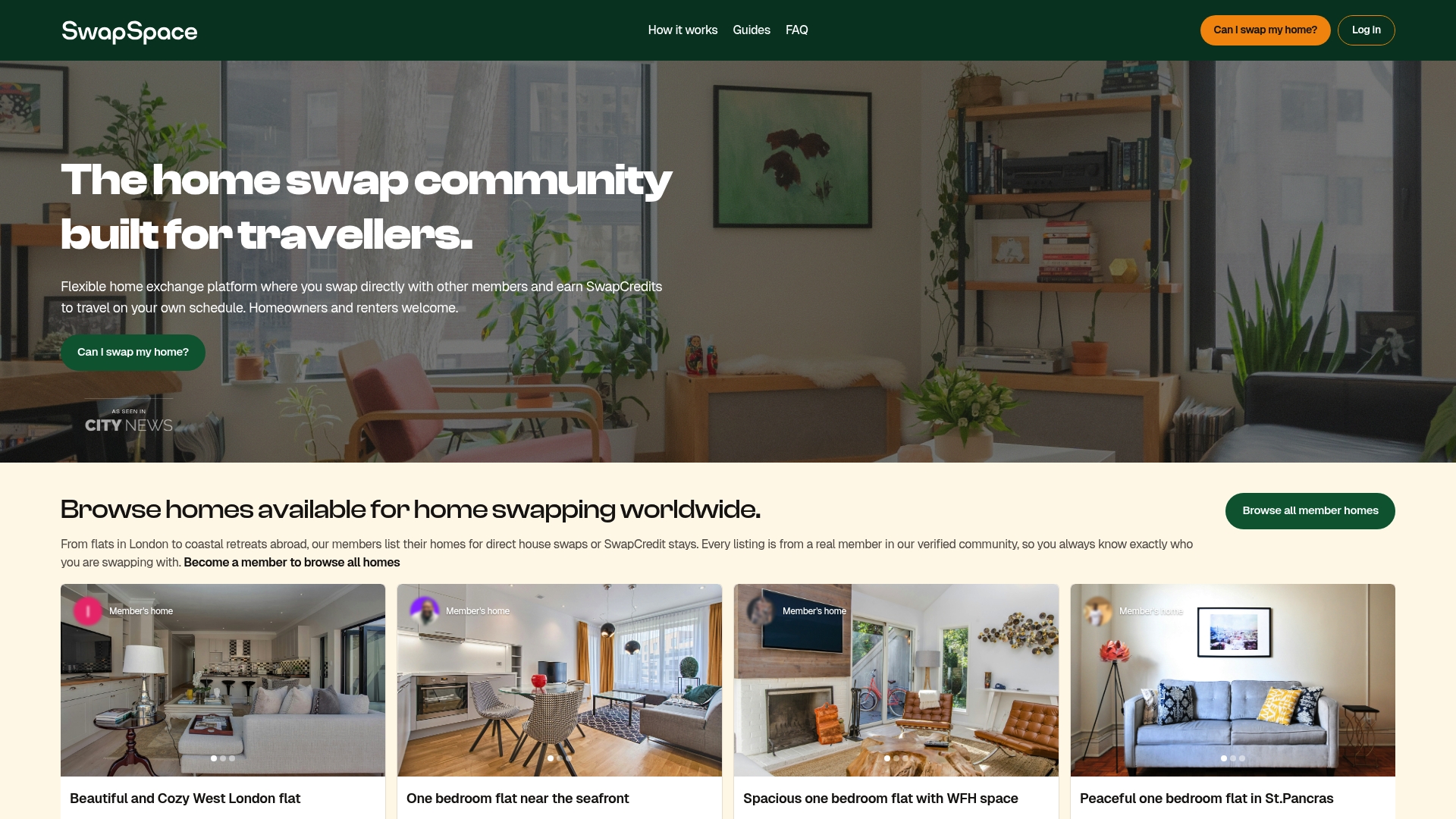
Discover SwapSpace and browse a growing catalogue of verified homes listed by real homeowners and renters just like you. Not sure where to begin? Review how it works to understand the SwapCredits system, identity verification process, and how to craft a profile that attracts the right swap partners. Your next trip, city or countryside, could cost far less than you expect.
Frequently asked questions
How do home swap points systems work for city and countryside swaps?
Points offer non-reciprocal flexibility, meaning you can host guests independently to earn credits, then spend those credits on a city or countryside stay that suits your schedule, without needing a simultaneous direct swap.
Is home swapping really cheaper than renting hotels or Airbnbs?
Research confirms that swappers save $1,500 to $5,000 per week compared to hotels in expensive markets, making it one of the most budget-friendly legitimate travel options available to homeowners and renters.
What are the biggest challenges for rural home swaps?
Rural swaps may require a car and involve variable internet quality and cleaning considerations, but thorough pre-swap communication and a detailed welcome pack resolve most practical challenges before they arise.
Are home swaps safe, especially in cities?
Modern platforms provide safety tips and screening tools, though reviewing your home insurance policy and checking platform-specific coverage options before hosting is always advisable, particularly for urban properties.
