

TL;DR:
- Home swapping offers a cost-effective alternative to expensive accommodations, providing authentic local experiences.
- Success depends on proper evaluation of eligibility, legal, insurance considerations, and building trust with clear communication.
- Creative arrangements and flexible planning can enhance travel value and lead to more rewarding, genuine experiences.
Accommodation costs quietly devour travel budgets. A week in a well-located apartment in Lisbon, Barcelona, or Tokyo can cost more than the flights themselves, leaving many travellers scaling back their ambitions or choosing cheaper, less interesting destinations. Home swapping sidesteps this problem entirely. By exchanging your home with someone in the place you want to visit, you eliminate the single largest travel expense while gaining something most hotels cannot offer: a genuinely local experience. This guide covers how to evaluate your options, compare leading platforms, build trust with swap partners, and find creative arrangements that stretch your travel further.
Table of Contents
- How to evaluate your home swap options
- Top platforms and their unique approaches
- Building trust and smooth communication
- Creative swap ideas for maximum value and authenticity
- What most guides miss about home swapping
- Start your home swap journey confidently
- Frequently asked questions
Key Takeaways
| Point | Details |
|---|---|
| Assess your eligibility | Clarify legal and insurance conditions for renters and homeowners before swapping. |
| Choose the right platform | Compare features, protection, and support to find the swap site that fits your goals. |
| Build trust with hosts | Use detailed profiles, verification, and clear communication for safe and satisfying exchanges. |
| Get creative with swaps | Opt for multi-location, themed, or family swaps to maximise value and authentic experiences. |
How to evaluate your home swap options
Before browsing listings or messaging potential swap partners, it is worth stepping back to assess whether home swapping actually suits your situation. Not every household is an obvious candidate, and understanding the practical requirements early saves time and prevents avoidable complications later.
The first question is eligibility. Homeowners generally have the simplest path, since they own the property and carry the relevant insurance. Renters face an additional step: according to common subletting rules, renters need explicit sublet permission from their landlord and must verify insurance and subletting clauses in their lease before proceeding. Some landlords are supportive; others are not. If you rent, get any permission in writing before you list your property on any platform.
Legal and insurance checks matter for homeowners too. Local council regulations, homeowners association (HOA) rules, and short-let restrictions vary significantly by area. As noted in guidance on house swap holidays, both renters and homeowners should check local laws and HOA agreements, and while most platforms offer some damage protection, it is sensible to supplement this with your existing homeowner or contents insurance policy rather than relying solely on platform cover.
Household considerations add another layer. Families with young children often benefit from swapping with other families, since the host home already contains the equipment and space needed. Pet owners need to be especially clear in their agreements: house swapping myths confirm that pet-sitting is not automatically included in a swap unless both parties explicitly agree to it. If your pet stays home during the swap, you need separate pet care arrangements.
Trust is the other foundational element. First-time swappers sometimes find the idea of strangers staying in their home unsettling. This is natural, but platforms have developed robust verification and review systems to address it. Reading through house swapping safety tips can help you understand what protections are actually in place and how the community polices itself through mutual accountability.
Here is a practical pre-swap checklist to work through before committing to any exchange:
- Confirm lease or ownership status and any sublet restrictions
- Review your home and contents insurance for relevant coverage gaps
- Check local short-let regulations or HOA rules
- Decide on pet and child care arrangements
- Identify what guests should and should not access (rooms, vehicles, storage)
- Prepare a clear welcome guide and house manual for visitors
- Review the platform’s dispute resolution and damage protection policy
Pro Tip: Write a simple one-page home agreement document covering house rules, emergency contacts, and any off-limits areas. Share it with your swap partner before confirming the exchange. This single step prevents the majority of misunderstandings.
The safe affordable swaps guide offers additional detail on structuring agreements and preparing your home for guests, which is particularly useful if you are doing this for the first time.
Top platforms and their unique approaches
With the stage set, readers can now explore the leading platforms that make swapping homes for holidays accessible. The home exchange market has grown considerably over the past few years. New memberships rose 67% between 2023 and 2024, and demand is tracking 24% higher for 2026, partly driven by interest around major events including the FIFA World Cup. Choosing the right platform shapes the quality of your experience from the start.
| Platform | Members/listings | Annual fee | Damage protection | Key feature |
|---|---|---|---|---|
| HomeExchange | 360,000+ homes | $220 to $235 | Up to $1 million | GuestPoints credit system |
| Kindred | 300,000 members | Credit-based | $100,000 host protection | Cleaning fees $20 to $45/night |
| HomeLink | 14,000 homes | Varies by region | Member-managed | Local support, founded 1953 |
| SwapSpace | Growing global | Free initially | Verified members | Invite-only community |
HomeExchange is the largest player, with over 360,000 listed homes globally and an annual membership fee in the $220 to $235 range. Its GuestPoints system allows one-way stays, meaning you do not need a simultaneous swap. You host someone, earn points, and spend those points staying elsewhere. The $1 million damage protection figure is a strong selling point for those concerned about property risk.
Kindred has grown aggressively, adding 150,000 members in 2025 alone and securing $125 million in funding to expand its platform. It operates a credit system with modest cleaning fees per night, which keeps costs low without eliminating them entirely. Host protection reaches $100,000, which is lower than HomeExchange but still substantial.

HomeLink takes a different approach. Founded in 1953, it is the oldest home exchange organisation in the world and focuses on a smaller, curated membership with local coordinators in many countries. It suits travellers who prefer human support over app-based convenience.
For family-friendly swap sites or alternative swap platforms beyond the three above, the range of options continues to expand. The key tradeoffs are between inventory size, fee structure, trust mechanisms, and ease of use.
Key platform selection criteria worth weighing:
- Inventory size in your target destinations
- Credit vs simultaneous swap model and how it fits your schedule
- Protection levels for damage and cancellation
- Verification standards applied to members
- App experience versus traditional listing format
The perfect house swap planning guide walks through platform comparison in more detail if you want to match your specific travel style to the right service. A trusted home swapping platform should always prioritise identity verification and member transparency above all else.
Building trust and smooth communication
Having surveyed platform options, readers need practical strategies for building trust and effective communication. No matter which platform you choose, the quality of your swap depends heavily on how well you and your partner communicate before the exchange takes place.
Start with your profile. Detailed descriptions and high-quality photographs are not optional extras; they are the primary way a stranger decides whether to trust you with their home. According to guidance from home exchange reviews, using detailed photos and thorough descriptions, communicating extensively including via video calls, and being flexible on dates and locations all significantly improve the likelihood of successful matches.
A good listing photograph shows natural light, a clean and tidy space, and genuine character. Avoid staging your home to look like a hotel room; swap partners specifically want the lived-in feel of a real home. Show the neighbourhood too, since local context often matters more than the square footage.
“Most users report satisfaction rates of 85 to 99%, with very few issues arising. Researchers attribute this to the reciprocal vulnerability of the arrangement: both parties have something at stake, which naturally encourages respectful behaviour on both sides.”
Platform verification systems back this up. As confirmed by HomeExchange review data, mutual trust built through identity verification, address confirmation, and peer reviews leads to rare disputes and strong overall satisfaction. The review system is particularly powerful because it creates lasting accountability. A member who treats a home poorly faces consequences that affect their future swap opportunities.
Video calls are underused but highly effective. A 20-minute conversation before confirming a swap gives both parties a far clearer sense of who they are dealing with than any number of written messages. It also provides an opportunity to walk through house-specific instructions, local recommendations, and any special arrangements.
Pro Tip: Leave a personalised welcome note and a neighbourhood guide for your guests. Include local restaurant recommendations, the best nearby park, supermarket hours, and any quirks the house has. This small gesture consistently earns strong reviews and sets the tone for a positive experience.
Explore safe home swapping insights and secure home swaps for a broader view of how experienced swappers maintain safety across multiple exchanges.
Creative swap ideas for maximum value and authenticity
Having explored creative tactics, it is helpful to consider expert perspective and practical lessons drawn from real-world swaps. Home swapping rewards creativity. The most experienced swappers do not treat it as a simple like-for-like transaction; they use the model to access experiences that would otherwise be financially out of reach.
Planning timeline matters enormously. Research consistently shows that planning two to six months ahead produces more options, better matches, and smoother logistics. Last-minute swaps are possible but rare, and they tend to attract fewer suitable candidates.
Here is a table of swap scenarios with context on growth and suitability:
| Swap type | Best suited to | Planning lead time | Appeal |
|---|---|---|---|
| Simultaneous family swap | Families with children | 3 to 6 months | Equipment already in place |
| Urban to rural exchange | Couples, remote workers | 2 to 4 months | Change of pace, lower density |
| Event-based swap | Festival or sports fans | 4 to 6 months | Location access without hotel surge pricing |
| Multi-location chain swap | Frequent travellers | 6+ months | Visit multiple countries in one trip |
| Interest-based swap | Hikers, cyclists, surfers | 2 to 5 months | Shared values, better property fit |
The 67% growth in new memberships between 2023 and 2024 reflects how mainstream home swapping has become, and HomeExchange Canada grew by 41% in 2025 alone, demonstrating how quickly adoption is spreading beyond Europe. The 24% demand increase linked to 2026 events suggests that event-based swapping is one of the fastest-growing applications of the model.
Here are some creative swap arrangements worth considering:
- Garden or outdoor space swaps: Homes with significant garden space or allotments can appeal strongly to urban dwellers who rarely access outdoor areas.
- Urban to rural exchanges: City homeowners swap with countryside properties for slower-paced breaks, while rural members access city culture and amenities.
- Themed holiday swaps: Match with someone who shares your interest, whether cycling, cooking, surfing, or birdwatching, for a ready-built travel framework.
- Festival and event swaps: Plan around specific events like music festivals or sporting tournaments, where staying in a home rather than a hotel cuts costs dramatically.
- Multi-city chain swaps: Use a credit system to visit two or three destinations in a single trip without a direct swap partner for each leg.
- Long-stay remote worker swaps: Swap for three to eight weeks with another remote worker, treating the exchange as a working sabbatical abroad.
Home swapping is particularly well-suited to frequent travellers taking two or more weeks per year, families, and those prioritising authentic local experience over convenience. For further ideas and swap and save strategies, there is a wealth of practical inspiration available to help you plan your first or next exchange.
What most guides miss about home swapping
Most articles about home swapping focus heavily on logistics: which platform to join, what your listing should include, and how to handle the paperwork. That is all useful. But the aspect most guides underplay is the emotional dimension, specifically the comfort level required to genuinely host strangers and to feel at ease in someone else’s home.
This matters more than any checklist. Frequent swappers consistently report that the financial savings are meaningful but not always the primary motivation over time. The deeper value lies in the sense of connection, in staying somewhere with a real kitchen, a neighbourhood rhythm, and the texture of ordinary local life. That experience is qualitatively different from anything a hotel offers.
The contrarian insight here is that flexibility is often worth more than the perfect property match. Travellers who insist on specific dates, specific cities, and specific home types narrow their options dramatically. Those willing to shift by a week, consider a nearby city, or accept a smaller property often find richer, more unexpected experiences as a result.
Explore authentic home swapping for a deeper look at what makes swaps genuinely rewarding beyond the cost savings. The emotional satisfaction of a well-matched swap is real, and it is something most financial comparisons simply cannot capture.
Start your home swap journey confidently
If this guide has sparked genuine interest, the next step is finding a platform that matches your values around trust, verification, and community. SwapSpace is built on exactly those principles: a verified, invite-only community where identity confirmation is standard, listings are genuine, and the credit system gives you flexibility to travel even when a direct simultaneous swap is not possible.
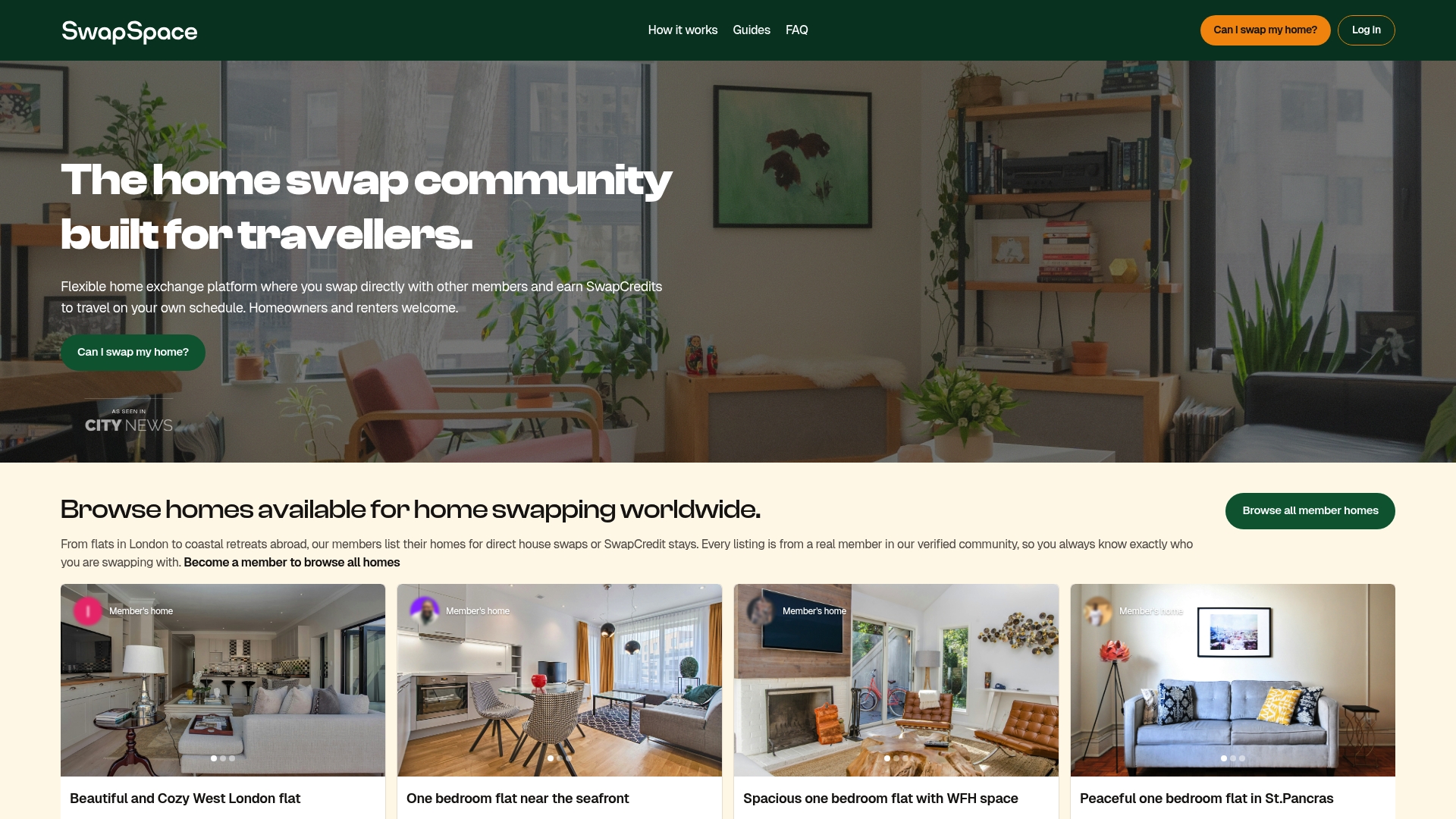
Explore SwapSpace to browse homes and understand how the community works before committing. If you want to understand the mechanics in detail, the how home swapping works page walks through the process from listing your home to confirming your first stay. You can also use the travel cost calculator to see exactly how much you could save compared to conventional accommodation on your next trip.
Frequently asked questions
Is home swapping safe for first-time hosts?
Yes. Most platforms rely on identity verification, address confirmation, and peer reviews to build accountability, and satisfaction rates of 85 to 99% reflect how rarely issues arise when both parties have a stake in the outcome.
What does home swap insurance usually cover?
Platform protection typically covers accidental damage, ranging from $100,000 on Kindred to $1 million on HomeExchange, but both renters and homeowners should check local laws and supplement with their existing home insurance policy for comprehensive cover.
How far in advance should I plan a home swap?
Planning two to six months ahead gives you the widest choice of matches and the best chance of finding a partner who fits your dates, destination, and household requirements.
Do renters need permission for home swapping?
Yes. Renters need sublet permission from their landlord confirmed in writing, and should verify both the lease terms and any relevant local regulations before listing their property on any home exchange platform.
