

TL;DR:
- Home exchange offers affordable, authentic travel experiences by avoiding hotel costs and fees.
- The market is rapidly growing globally, driven by major events and increasing local immersion demand.
- Building trust and community involvement are key to successful and fulfilling home exchange experiences.
Home exchange is no longer a niche curiosity for the adventurous few. In 2026, it has become one of the most talked-about ways to travel affordably without sacrificing quality or authenticity. Home swapping demand is surging, driven by rising accommodation costs, a growing appetite for local immersion, and major global events pulling millions of travellers towards more creative arrangements. This article walks you through the trends shaping the market, a balanced look at the pros and cons, and clear steps to help you decide if home swapping is your smartest move this year.
Table of Contents
- What is fuelling home exchange popularity in 2026?
- How the home exchange market is evolving
- Pros and cons: Is home swapping right for you?
- Getting started: Steps to a safe, affordable and rewarding swap
- The overlooked truth: Community is the heart of home exchange success
- Explore trusted home exchange with SwapSpace
- Frequently asked questions
Key Takeaways
| Point | Details |
|---|---|
| Surging demand | Home exchange demand has climbed sharply in 2026, especially around major global events. |
| Membership growth | Platforms show significant member increases and market expansion across the globe. |
| Affordability & immersion | Cost savings and authentic local experiences make home exchange increasingly attractive. |
| Community advantage | Active community participation leads to higher trust and richer swap experiences. |
| Preparation is key | A successful swap relies on careful planning, safety awareness, and choosing the right platform. |
What is fuelling home exchange popularity in 2026?
Several powerful forces have converged to push home exchange firmly into the mainstream. Understanding them helps you see not just why people are swapping, but why the timing has never been better.
Affordability is the headline driver. Hotel costs in major cities continue to climb, and short-term rental platforms have introduced service fees that can add 20 to 30 per cent on top of listed prices. Home exchange sidesteps both problems. Once you pay a modest annual membership fee, your accommodation is essentially free for every trip you arrange through the platform. For a family of four travelling for two weeks, that saving can easily reach several thousand pounds.
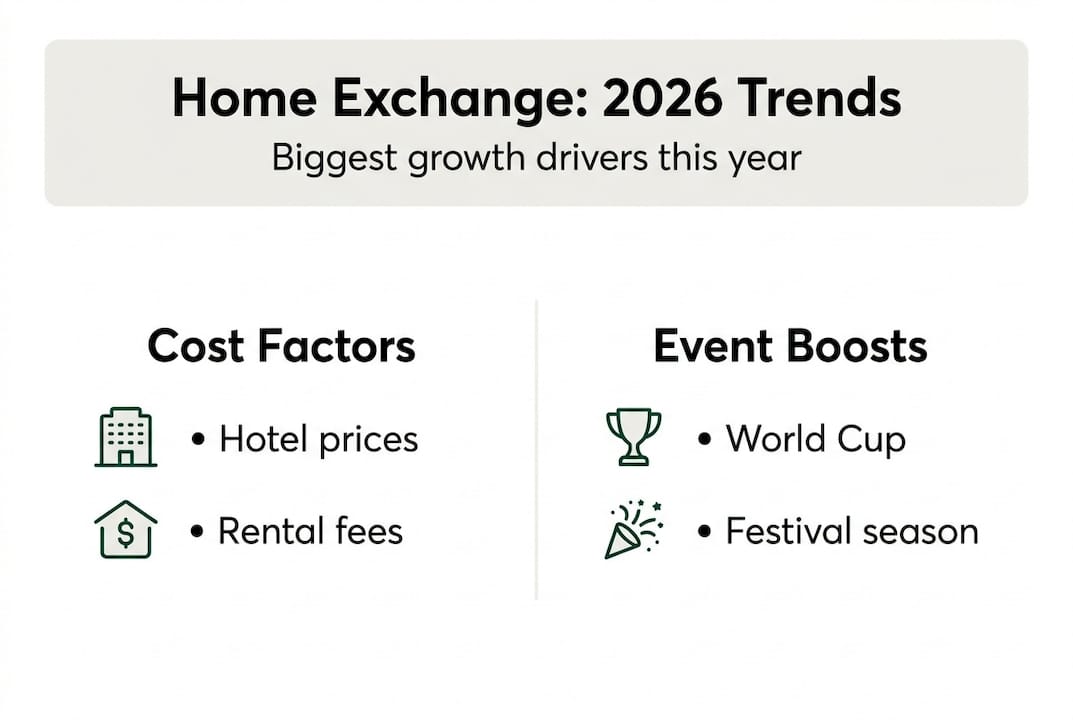
Major events are supercharging demand. The 2026 FIFA World Cup is a standout example. Finalized exchanges rose 24% for summer 2026 compared to the prior year, with some host cities recording increases of up to 500 per cent in exchange requests. That is not a rounding error. It reflects a genuine shift in how people think about securing accommodation for marquee events, where hotel prices routinely triple or quadruple.
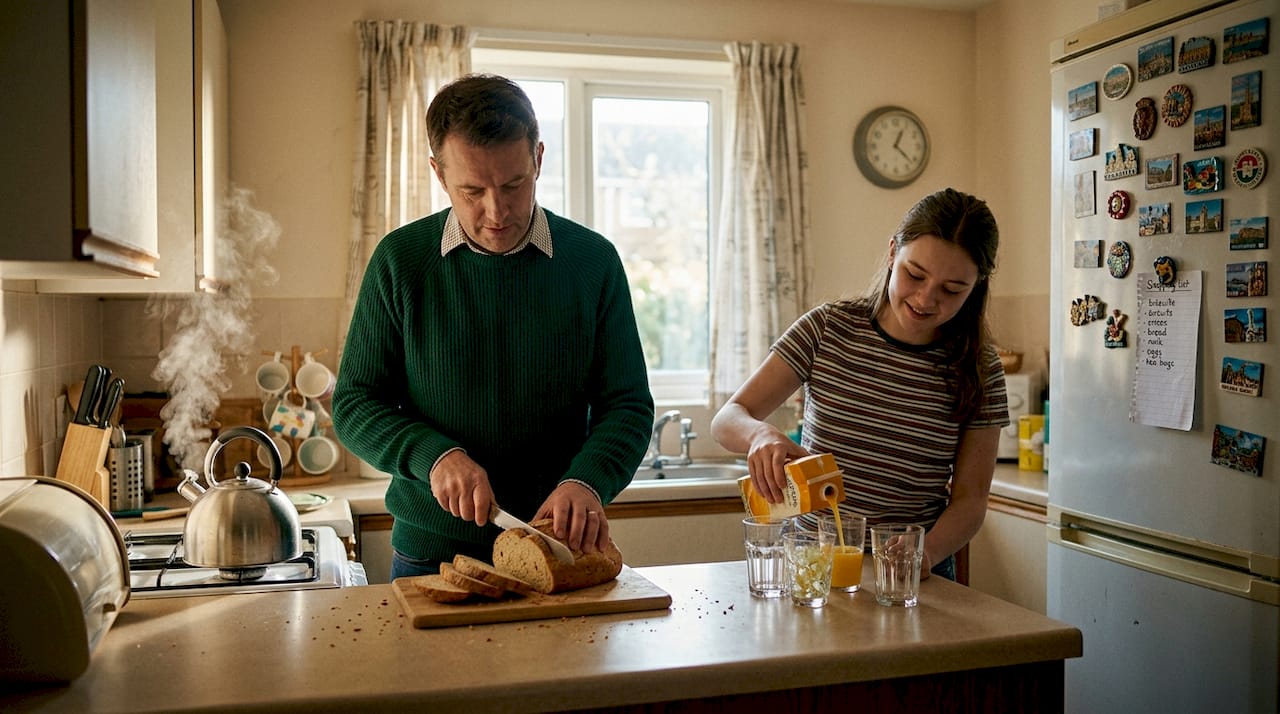
The appeal of home swapping explained goes beyond money, though. Travellers who stay in a real home cook in a real kitchen, sleep in a proper bed, and live in an actual neighbourhood rather than a sanitised tourist corridor. That texture of a holiday is increasingly what people are seeking.
Community is also a decisive factor. HomeExchange Days 2026 features 3,000+ events worldwide, connecting members through meetups, local tours, and cultural exchanges that no hotel loyalty programme can replicate. The community role in home exchange is not a marketing add-on. It is baked into the experience.
Key reasons home exchange is booming in 2026:
- Accommodation costs at major events are prohibitively expensive through traditional channels
- Travellers prioritise lived experiences over polished but impersonal hotel stays
- Verified member platforms have resolved many early trust concerns
- Remote working patterns give people more scheduling flexibility to plan longer exchanges
- Growing environmental awareness makes swapping an attractive, lower-footprint option
“Home exchange gives you a genuine slice of local life. You are not just visiting a city, you are temporarily living in it.” — HomeExchange member, 2025 community survey
How the home exchange market is evolving
The data tells a compelling story about where this market has come from and where it is heading.
HomeExchange, one of the largest platforms in the sector, now has 250,000 members globally, including 43,000 in Spain alone. Canada has seen its membership rise 41 per cent in 2025, and in some markets, the number of completed exchanges has quintupled since 2020. Those are not gradual gains. They signal a category that has found its moment.
The broader market reflects this momentum. The home exchange service sector is projected to grow at 12.5% CAGR between 2025 and 2033, reaching an estimated USD 4.5 billion. That projection accounts for membership expansion, platform diversification, and the emergence of credit-based systems that give members greater flexibility in how they arrange stays.
| Region | Current status | Key trend in 2026 |
|---|---|---|
| North America | Established, high growth | Canada up 41%, World Cup demand spike |
| Western Europe | Largest member base | Spain leads with 43,000 members |
| Asia-Pacific | Emerging market | Fastest growth rate in new sign-ups |
| Latin America | Developing | World Cup host country surge |
| Australasia | Niche but growing | Rising interest among retirees |
Geographic hot spots are shifting too. Spain and France have long been European strongholds for home exchange concepts and practice, but Asia-Pacific is now the fastest-growing region for new memberships. Countries like Japan, South Korea, and Australia are seeing growing interest from both inbound and outbound exchangers.
Understanding the full landscape also means knowing your options. If you are comparing platforms, a useful starting point is reviewing homeswap.com alternatives to see how different services structure their fees, verification processes, and listing databases. Not every platform is equal in terms of verification rigour or community depth.
One feature worth understanding before you commit to any platform is how a global home listing works and what it means for your ability to find compatible swaps in your preferred destinations.
Pro Tip: If you are in a city hosting a major event in 2026, your home suddenly has outsized exchange value. List it now and use the SwapCredits or direct exchange you earn to fund a trip somewhere you have always wanted to go, while your city attracts visitors willing to offer great homes in return.
Pros and cons: Is home swapping right for you?
Home exchange is not a perfect fit for every traveller, and being honest about that is part of making a smart decision. Here is a balanced look at what you gain and what you need to be prepared for.
| Factor | Home exchange | Traditional hotel |
|---|---|---|
| Accommodation cost | Free (post-membership fee) | Full nightly rate applies |
| Local immersion | High, live in a real neighbourhood | Low to moderate |
| Flexibility | Moderate, requires advance matching | High, book last-minute |
| Space for families | Typically more space | Often limited and expensive |
| Community connections | Strong through platform events | Minimal |
| Preparation required | Moderate, cleaning and hosting prep | None |
| Location availability | Growing but not universal | Extensive globally |
The Globe and Mail’s reporting on home swapping highlights both sides clearly. The clear advantages include free lodging once you factor in the annual fee, deep local immersion, and the growing community dimension through events like HomeExchange Days. The genuine challenges include the time investment required to find a suitable match, the effort of preparing your home for guests, and less spontaneity compared to booking a hotel the night before.
Who benefits most from home exchange?
- Families with children. A full home with a kitchen, multiple bedrooms, and a garden is often a fraction of the equivalent hotel cost, if such equivalence even exists.
- Remote workers. Flexible schedules make it easier to plan longer exchanges, and working from someone else’s well-equipped home in a new city is a genuinely productive way to travel. See how home exchange works for remote workers for practical guidance.
- Retirees with time and space. An empty nest is an asset in the exchange world. Longer availability windows and less pressure on exact dates make matching much easier.
- Immersive travellers. If you want to shop at the local market, cycle to work with the neighbours, and understand a place rather than just photograph it, home exchange delivers in a way hotels simply cannot.
“We saved over £3,000 on accommodation last summer and ended up with lifelong friends in two different countries. The swap was the point, but the people became the memory.” — SwapSpace member, 2025
Common challenges to prepare for include:
- Finding a match requires effort, especially for less popular destinations or tight date windows
- You need to invest time in writing a compelling home profile and communicating with potential partners
- Preparing your home for guests takes planning, including clear instructions, tidy spaces, and basic hospitality touches
- Some travellers find the reciprocal obligation slightly uncomfortable at first
Following a clear step-by-step home exchange guide resolves most first-timer anxieties quickly. And reviewing home exchange safety tips before your first swap gives you a solid, realistic foundation for trust.
Getting started: Steps to a safe, affordable and rewarding swap
The growth in exchange volumes, with some markets seeing exchanges quintupled since 2020, shows that first-time barriers are coming down. Here is how to move from curious to confirmed swapper.
Step one: Choose a reputable, verified platform. Not all home exchange platforms apply the same rigour to identity verification or member screening. Look for platforms that require ID verification, have a clear dispute process, and maintain an active community. A detailed home exchange step-by-step guide will help you understand exactly what to look for.
Step two: Create an honest, detailed home profile. Include high-quality photographs of every room, accurate descriptions of the neighbourhood, and clear information about amenities. Homes with thorough profiles receive significantly more exchange requests. Be honest about quirks too. A creaky staircase or a temperamental boiler mentioned upfront builds trust rather than eroding it.
Step three: Start browsing early and be flexible. Popular destinations fill up months in advance, particularly for summer and major events. Browse with open dates where possible and consider less obvious travel periods, shoulder season swaps often yield better matches with lower competition.
Step four: Communicate warmly and clearly. A personalised message to a potential swap partner is far more effective than a generic request. Explain why you love their home, what you will bring to the exchange, and what your own home offers in return. Think of it as a conversation, not a transaction.
Step five: Review safety tips for swaps and prepare your home thoughtfully. Secure personal documents and valuables, provide a guest guide with local recommendations, and agree clearly on expectations around cleaning, guest limits, and key handover.
Step six: Engage with community events. The community dimension of home exchange is one of its most underrated assets. Attending local meetups or virtual events organised through your platform significantly increases trust with potential swap partners and enriches the overall experience.
Pro Tip: If your home is in a desirable location but you cannot find a direct swap match, consider earning SwapCredits through non-simultaneous exchanges. This lets you host someone now and use the credits for a one-way stay somewhere else entirely, giving you much greater scheduling freedom.
Additional practical steps for first-timers:
- Read reviews of other members before reaching out and ask for references from completed swaps
- Confirm insurance coverage for your home during the exchange period
- Set up a clear welcome pack with WiFi details, local transport info, and emergency contacts
- Plan a contingency for late cancellations, platform support teams can help mediate
The overlooked truth: Community is the heart of home exchange success
Most conversations about home exchange focus almost entirely on cost savings. That framing is understandable, because the financial case is genuinely compelling. But it misses something important.
The members who report the highest satisfaction from home exchange are rarely those who treat it purely as a budget strategy. They are the ones who invest in the relational side of the experience, communicating openly with swap partners, leaving personalised notes, recommending their favourite local spots, and participating in community events. HomeExchange Days 2026 with over 3,000 events is a visible expression of this reality. It is not just a marketing initiative. It reflects a community that has discovered genuine social value in the practice.
There is a practical truth here as well. Trust is the currency that makes home exchange function. The more actively you participate in a platform’s community, the more visible and credible you become to potential swap partners. A member with a rich profile, positive reviews, and community event participation will consistently outperform an equivalent home listed by someone who signed up and went quiet. It is not complicated, but many new members underestimate it.
The role of community in exchanges also has a long-term compounding effect. Relationships built through a first successful swap often lead to repeat exchanges, referrals to friends, and a growing network of trusted contacts across multiple countries. Some long-term home exchangers describe a kind of global family, people they have never lived near but whose homes they know intimately and whose hospitality they have experienced firsthand.
If you are approaching home exchange purely as a transactional cost-cutting measure, you will likely find it adequate. If you approach it as a way to build genuine connections while travelling affordably, you will find it transformative. That distinction is worth sitting with before you begin.
Explore trusted home exchange with SwapSpace
Home exchange in 2026 offers a genuinely compelling alternative to expensive hotels and impersonal short-term rentals, but the platform you choose matters enormously.
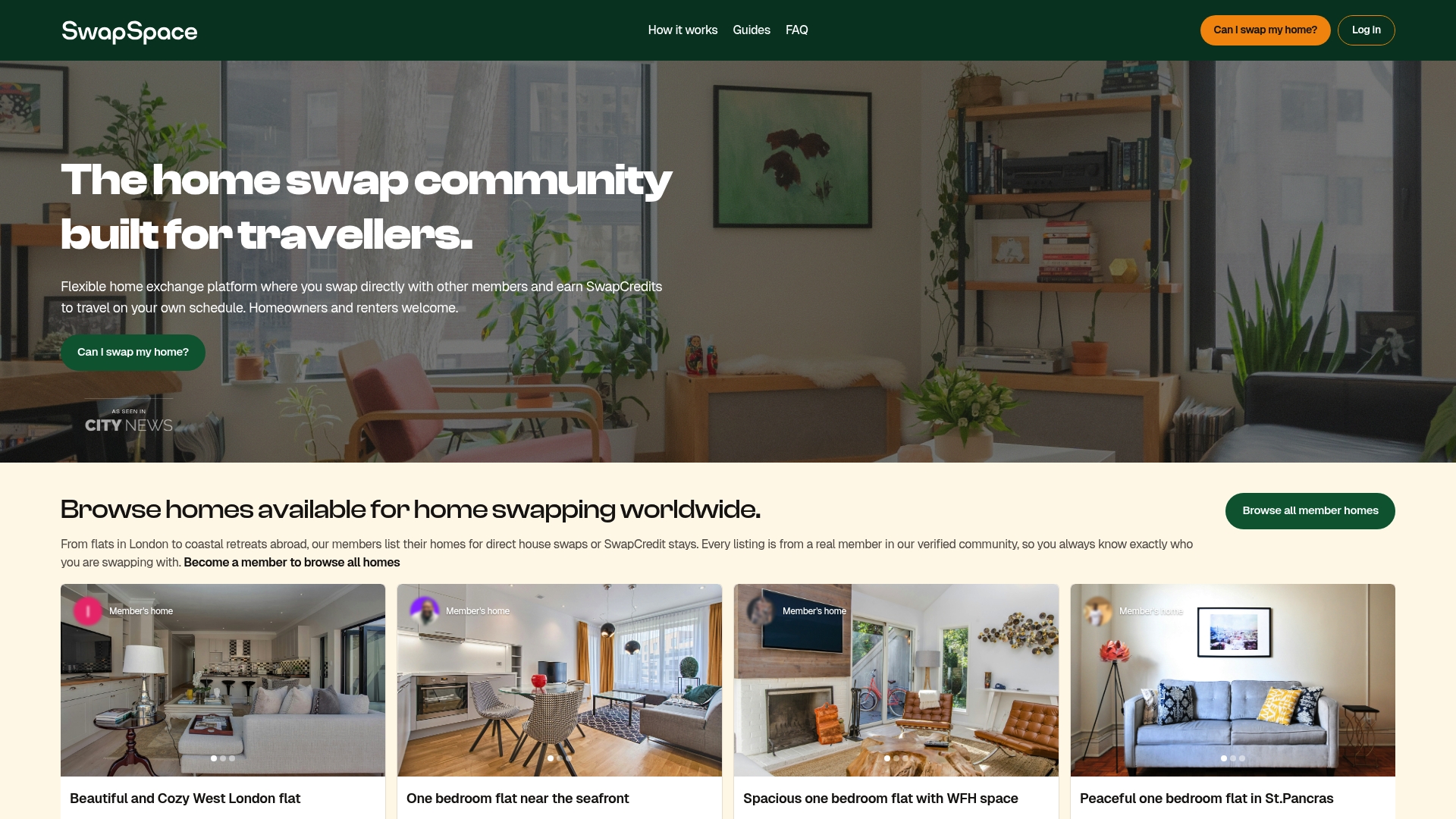
SwapSpace is built around the principles that make exchanges work well: verified member profiles, identity confirmation, a credit-based system for flexible one-way stays, and an invite-only community that prioritises trust. Whether you are a family looking to slash holiday costs, a remote worker seeking a base in a new city, or a retiree with a great home and time to explore, SwapSpace gives you the tools to make it happen safely. Discover how SwapSpace works and take the first step towards travel that costs less and gives more.
Frequently asked questions
Why is home exchange growing fastest in 2026?
Home exchange demand is surging primarily because of rising accommodation costs and the World Cup effect, which has pushed exchange requests up by as much as 500 per cent in some host cities. The desire for authentic, locally-lived travel experiences is equally powerful.
Which regions are leading the home exchange market?
North America and Europe remain the dominant markets, with Spain particularly strong, but Asia-Pacific is the fastest-growing region for new memberships in 2026, driven by increasing outbound travel interest and growing platform awareness.
What are the main advantages of home exchange?
Cost savings, genuine local immersion, and meaningful community connections are the core benefits. HomeExchange Days 2026 featuring 3,000+ events illustrates how the social dimension has become just as valuable as the financial one, particularly for families and remote workers.
Are there drawbacks to home swapping?
Yes. Matching, preparation, and flexibility are the main challenges. Finding a compatible swap requires time and communication, and preparing your home for guests takes genuine effort that traditional hotel booking simply does not demand.
How do I get started with a safe, successful home exchange?
Choose a verified platform, build a detailed and honest home profile, and engage actively with the community. In markets where home exchange has taken hold, exchanges have quintupled since 2020, which means the pool of potential partners and the depth of community resources available to first-timers has never been greater.
