

TL;DR:
- Home exchange offers a cost-effective, personalized alternative to traditional rentals by allowing genuine living experiences in trusted communities. It provides longer-term stability, local immersion, and relationship-building, especially beneficial for digital nomads and families seeking authentic travel. Verified platforms like SwapSpace facilitate safe, flexible, and rewarding exchanges that transform travel beyond mere cost savings.
Most travellers assume that booking a holiday rental is the default, sensible choice. It is familiar, predictable, and widely available. But that assumption deserves a closer look, because home exchange is quietly reshaping how families, couples, and digital nomads think about accommodation, cost, and what travel can actually feel like when you are living in a real home rather than a packaged space.
Table of Contents
- Understanding home exchange and traditional rentals
- Comparing costs, value, and savings
- Experience: immersion, comfort, and local living
- Practical strategies and common mistakes to avoid
- Why swapping your home beats renting for real immersion and savings
- Explore trusted home exchange platforms
- Frequently asked questions
Key Takeaways
| Point | Details |
|---|---|
| Immersive travel experience | Home exchange offers authentic local living and deeper cultural connections compared to standard rentals. |
| Potential for substantial savings | Cost reductions are strongest for longer stays and careful exchange planning, especially for digital nomads and families. |
| Verification and trust are essential | Successful home exchange relies on platform verification, user reviews, and transparent communication. |
| Market numbers are illustrative | Published statistics are useful for trends but not a substitute for carefully researching options. |
| Smart strategies beat pitfalls | Plan ahead, use verified exchanges, and check amenities to avoid common mistakes in home swapping. |
Understanding home exchange and traditional rentals
Home exchange is straightforward in principle: two parties agree to stay in each other’s homes, either simultaneously or at different times using a credit-based system. You open your home to a verified member, and in return you gain access to theirs. The arrangement can be a direct swap or a one-way stay funded by credits earned through hosting. There are no nightly fees between members. The platform itself may charge a membership fee, but the accommodation cost drops to near zero.
Traditional rentals, including platforms such as Airbnb and Vrbo, work differently. You pay a nightly rate set by the property owner, plus a service fee charged by the platform, plus any cleaning fees, and sometimes local taxes. For a family of four staying a week in a popular European city, those fees add up to a significant total before you have even left home. Booking is fast and the choice is enormous, which explains the appeal.
The key differences go beyond price. Home exchange offers a level of personalisation that rentals rarely match. You are staying in someone’s actual home, with their books on the shelves, their coffee machine on the counter, and their neighbours next door. Rentals increasingly feel designed for turnover rather than for living. They are comfortable, often well-photographed, but rarely feel like a base for genuine local life.
A common misconception is that home exchange is inherently riskier than renting. In fact, home exchange concepts are built around verified identities, transparent reviews, and mutual accountability that is structurally different from the anonymous transactions common in traditional rental markets. Another misconception is that rentals are always simpler to arrange. For a short weekend break, that may be true. For a longer stay, the planning involved in both models is more comparable than people expect.
“Home exchange can reduce the booking churn that digital nomads often face, providing a more lived-in home base, though it still requires planning and reliable logistics like Wi-Fi and quiet space.” This framing, noted in home swapping for digital nomads, reflects a growing recognition that the model suits longer, purposeful travel rather than impulse weekend trips.
The home exchange market research suggests the sector has grown steadily as more travellers seek alternatives to commercial accommodation. A digital nomad home exchange arrangement, for instance, can provide a stable base in a new city without the financial pressure of nightly rates. The community aspect, knowing your host and feeling accountable to them, also changes the texture of a stay in ways that an anonymous rental simply cannot replicate.
Key differences between the two models include:
- Cost structure: Home exchange has near-zero accommodation costs after a membership fee; rentals charge per night plus platform and cleaning fees.
- Personalisation: Exchange homes reflect real lives; rentals are often standardised for guests.
- Community: Exchange members form a genuine network of trust; rental transactions are largely transactional.
- Flexibility: Non-simultaneous swaps allow more scheduling freedom than direct exchanges.
- Verification: Reputable exchange platforms require identity checks; rental platforms vary in their verification rigour.
Comparing costs, value, and savings
The financial case for home exchange is compelling, though it is worth being precise about the numbers. Published savings figures from exchange platforms often use assumed nightly rates for hotels or Airbnb listings rather than independently verified data. As Airbnb pricing statistics research notes, benchmarks vary significantly by city and pricing environment, so treat illustrative comparisons as directional rather than absolute.
That said, the structural difference is real. A typical Airbnb rental in a major European city might cost between £120 and £250 per night before platform and cleaning fees. A week-long stay could therefore cost £1,000 to £2,000 or more in accommodation alone. A home exchange for the same period costs the price of your annual membership, which on most platforms runs from free to a few hundred pounds per year. The difference is substantial, particularly for longer stays or families travelling together.
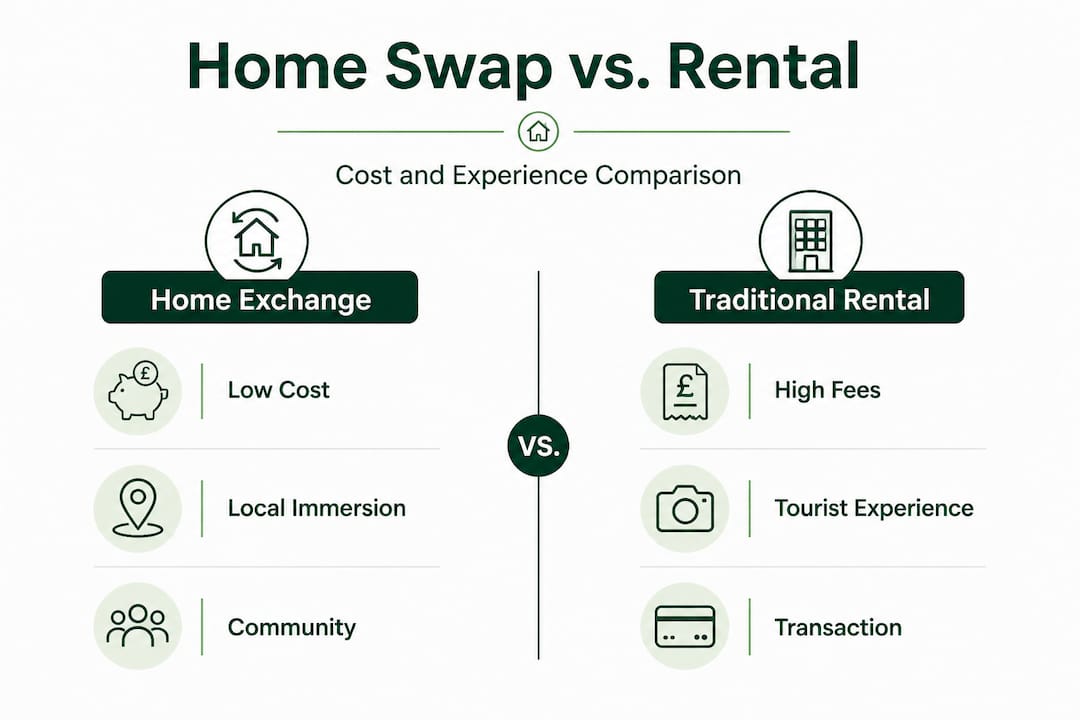
| Feature | Home exchange | Traditional rental |
|---|---|---|
| Nightly cost | Near zero (membership covers access) | £80 to £300+ depending on location |
| Platform fees | Annual membership (free to ~£200/yr) | 6% to 15% service fee per booking |
| Cleaning fees | None between members | £30 to £150 per stay |
| Amenities | Full home: kitchen, laundry, local tips | Variable; often standardised |
| Community | Verified members, reciprocal trust | Transactional, often anonymous |
| Privacy | High; direct arrangement with host | Moderate; managed through platform |
| Flexibility | Non-simultaneous options available | Fixed booking windows |
For home exchange for remote workers, the value calculation extends beyond the nightly rate. A stable, well-equipped home with reliable internet in a city you want to explore for three or four weeks represents a very different value proposition than a series of short rentals that each require new logistics, new checkout times, and new neighbours.
Pro Tip: To maximise savings through home exchange, consider non-simultaneous swaps rather than direct exchanges. This approach gives both parties far more scheduling flexibility, and it means you are not trying to co-ordinate matching dates across two different households. Use SwapCredits earned from hosting to book stays in destinations you want to visit, regardless of whether your host wants to visit you at the same time.
The step-by-step home exchange guide is a useful resource for understanding how to build a credit balance before your first trip. Starting early, listing your home with strong photos and accurate descriptions, and responding promptly to enquiries all help you accumulate credits that translate directly into free nights in other cities.
Experience: immersion, comfort, and local living
Cost is only part of the story. The experience of staying in someone’s home is qualitatively different from a rental, and that difference matters more than people anticipate until they have tried it.
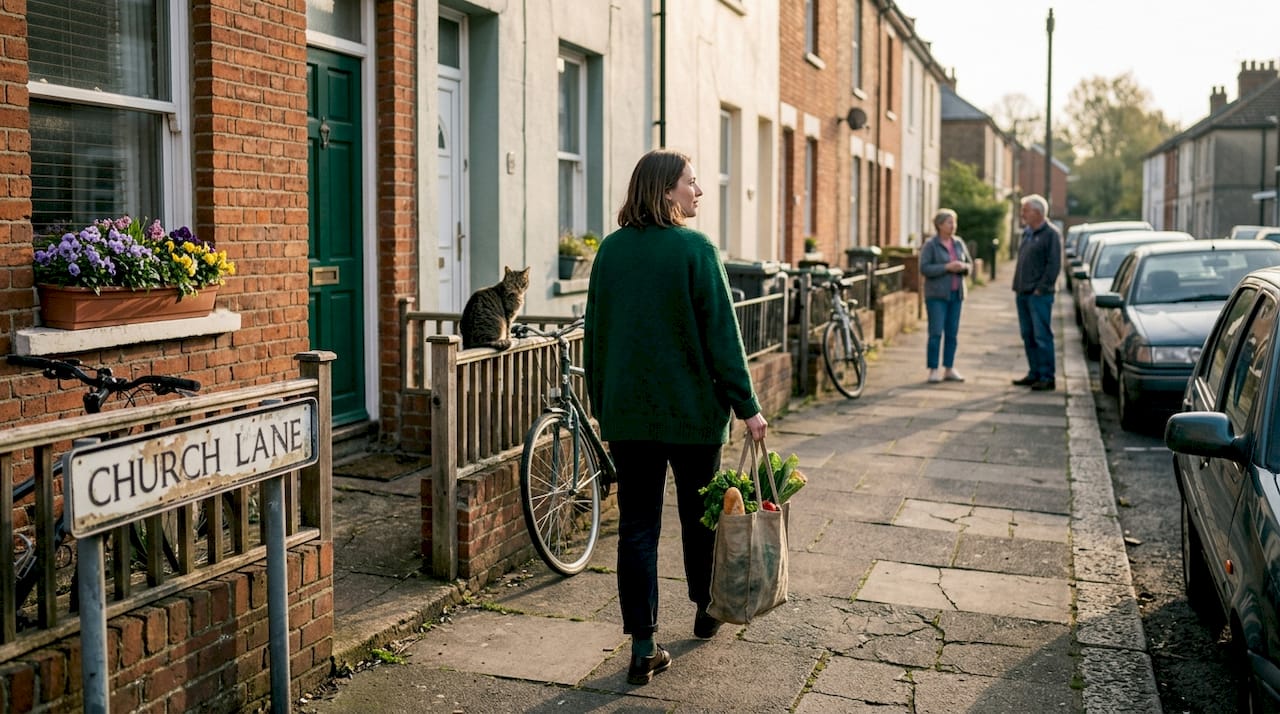
When you stay in a home exchange, you are embedded in a real neighbourhood. Your local supermarket is the one the owner uses. The café they walk to in the morning becomes your café. You cook in a kitchen stocked with actual spice racks and decent knives rather than a set of rental-grade pots. For families, having a garden or a second living room is normal rather than a premium upgrade. These details change how a trip feels, day to day.
For couples, a home exchange in a smaller city or a coastal town can feel far more romantic and personal than a generic serviced apartment. You are not living inside someone else’s idea of a “guest experience.” You are living inside their actual life, which is more interesting.
Digital nomads gain a particularly specific benefit. A trusted home exchange arrangement in a new city for three to six weeks gives a working traveller a genuine base without the cost pressure that forces constant movement. The key, as noted in expert guidance focused on remote work travel, is confirming logistics before you arrive.
Key comfort and immersion features that home exchange typically offers:
- A fully equipped kitchen, reducing food costs and encouraging cooking locally
- A washing machine, which matters enormously on longer stays
- Reliable broadband, though this must always be confirmed in advance
- Local knowledge from your host, often provided through a welcome guide or direct messages
- Neighbourhood access, including parks, markets, and community spaces that tourists rarely find
- Non-simultaneous swap options that allow flexible scheduling without co-ordinating calendars
A home exchange safety tips resource outlines how verified users and transparent review systems reduce the uncertainty that puts some travellers off. The essential home exchange features that reputable platforms provide, including identity verification and secure messaging, go a long way toward making the model feel as reliable as a well-reviewed rental.
Practical strategies and common mistakes to avoid
Knowing home exchange is appealing in theory is different from making it work in practice. There are clear steps that make the difference between a smooth swap and a frustrating one.
- Verify your platform thoroughly. Choose a platform with identity verification, a clear review system, and responsive support. Do not rely on unverified listings or informal arrangements.
- Create a detailed, honest listing. Include accurate photos, a clear description of your broadband speed, parking situation, and local transport links. Hosts who give accurate information receive better reviews and more swap requests.
- Communicate clearly before confirming. Discuss check-in logistics, any house rules, and practical details like Wi-Fi passwords and appliance instructions well in advance.
- Start with non-simultaneous swaps. These are easier to arrange and give you more flexibility, particularly for your first exchange.
- Build your community profile. Engage genuinely with community in home exchange by reviewing previous hosts, responding to messages promptly, and treating every swap as a relationship rather than a transaction.
- Research your destination thoroughly. Confirm internet speed, local transport, nearby shops, and any neighbourhood considerations that matter to your travel style.
- Use directional market data carefully. Market-size numbers for home exchange often come from research reports and may not reflect audited booking volumes. Use them for context, not as decision-grade metrics.
Common mistakes include underestimating Wi-Fi needs, particularly for remote workers who cannot afford unreliable connections mid-project. Another frequent error is failing to engage with the community dimension of the model. Home exchange is not just a logistics exercise. The relationships you build, the reviews you write, and the trust you extend to others are what make the system function well for everyone.
Pro Tip: When browsing alternatives to mainstream platforms, resources like homeswap.com alternatives and invite-only home exchange communities offer a useful comparison of how different platforms handle verification and community standards. Invite-only models tend to attract more committed members, which generally improves the quality of exchanges.
Why swapping your home beats renting for real immersion and savings
Most cost comparisons between home exchange and traditional rentals focus narrowly on nightly rates. They miss the longer arc. The traveller who uses home exchange over several years builds a network of trusted contacts across multiple cities. They develop a reputation within a verified community. They accumulate credits that translate into free accommodation in places they have always wanted to visit. None of that appears in a simple cost-per-night table.
Rentals still make sense in specific situations. If you need accommodation for a single night, a weekend, or a city where you have no reciprocal connections, a rental is faster and simpler. For short stays, the logistical overhead of arranging an exchange rarely justifies the effort. Rentals are also well suited to travellers who prefer a strictly transactional arrangement, those who want to keep their home entirely private, or those travelling to destinations where the exchange community is still sparse.
But for families planning a two-week stay, couples seeking genuine immersion in a new city, or digital nomads building a life across multiple countries, home exchange changes the equation entirely. The digital nomad savings potential over twelve months is not incremental. It is transformative, because you are removing one of the largest recurring costs in a nomadic lifestyle.
The contrarian insight that most travel guides overlook is this: the real value of home exchange is not the money you save on a single trip. It is the shift in how you relate to travel itself. You stop being a customer passing through someone else’s product and start being a guest in someone’s actual life. That changes what you notice, how you move through a city, and what you remember afterwards. Rentals have become extraordinarily good at comfort and convenience. They have not cracked the deeper question of connection.
Explore trusted home exchange platforms
If you are ready to move from understanding the model to actually trying it, the practical next step is finding a platform that takes verification, community, and transparency seriously.
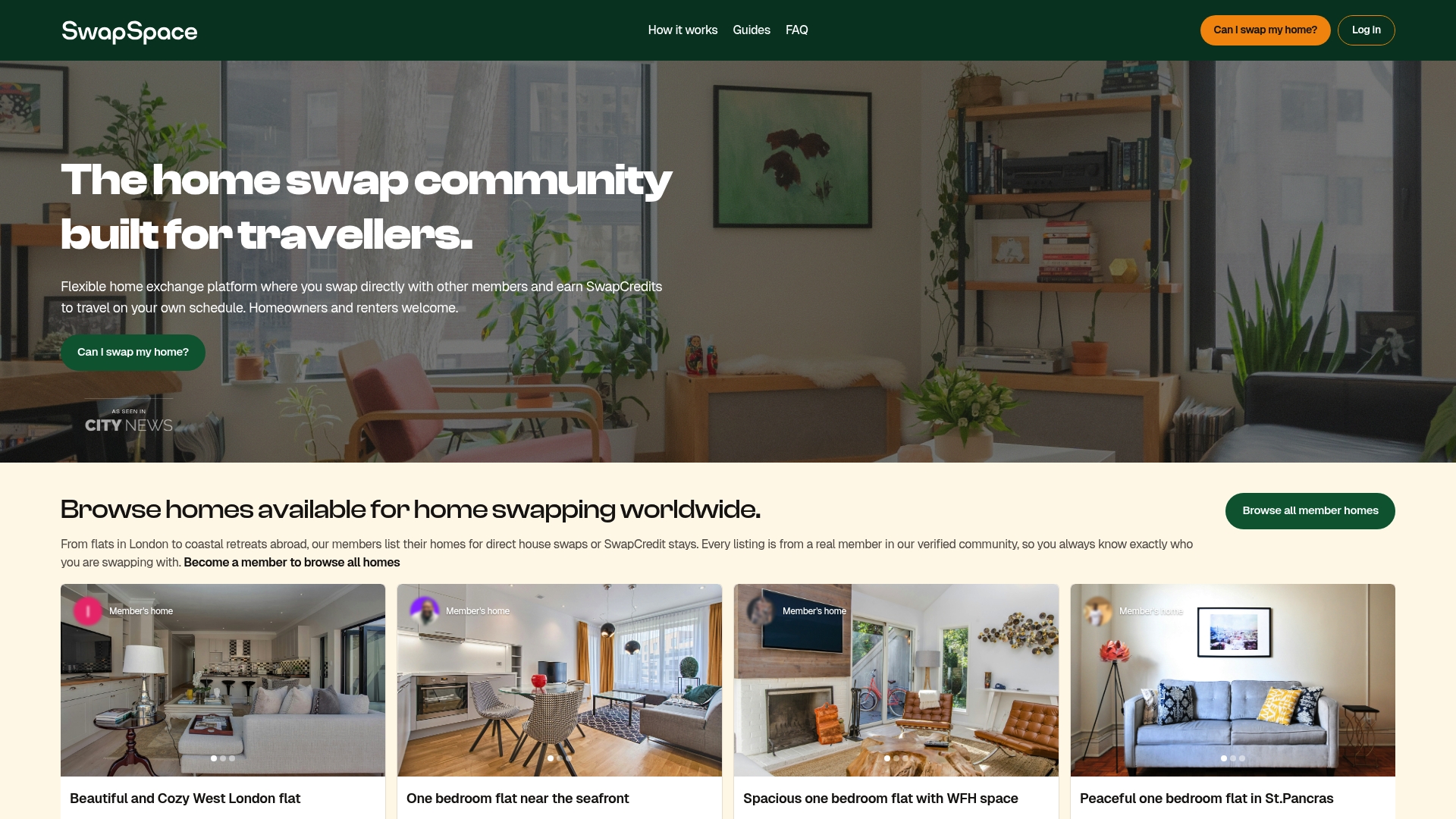
SwapSpace is designed precisely for travellers who want the benefits of home exchange without the uncertainty that puts many people off. As a trusted home swap platform, it connects verified members through an invite-only community where identity checks and transparent reviews are standard. You can list your home, browse global listings, and earn SwapCredits through hosting to fund future one-way stays. How SwapSpace works is worth exploring in detail, especially the credit system that makes non-simultaneous swaps practical for busy families and remote workers alike. Apply to SwapSpace and see how straightforward genuine home exchange can be.
Frequently asked questions
Is home exchange safer than traditional rentals?
Both models can be safe when you use verified platforms and review records carefully; home exchange providers typically place a stronger emphasis on member identity verification and mutual accountability, which creates a layer of trust that many rental platforms do not replicate.
How much money can I save through home exchange?
Savings depend on location, platform, stay duration, and the nightly rates you would otherwise pay; published comparisons are illustrative rather than audited, but for longer stays, Airbnb pricing statistics confirm that commercial accommodation costs can be significant, making home exchange a meaningfully cheaper alternative across a full year of travel.
What are the main drawbacks of home exchange?
Home exchange requires forward planning, genuine community engagement, and clear logistical preparation, particularly around reliable internet and quiet working space for digital nomads and families who cannot compromise on connectivity.
Are market-size numbers for home exchange reliable?
Market-size figures for the home exchange sector are directional and sourced from research reports rather than independently audited booking data; they provide useful context for understanding growth trends but should not be used as precise decision-grade metrics.
